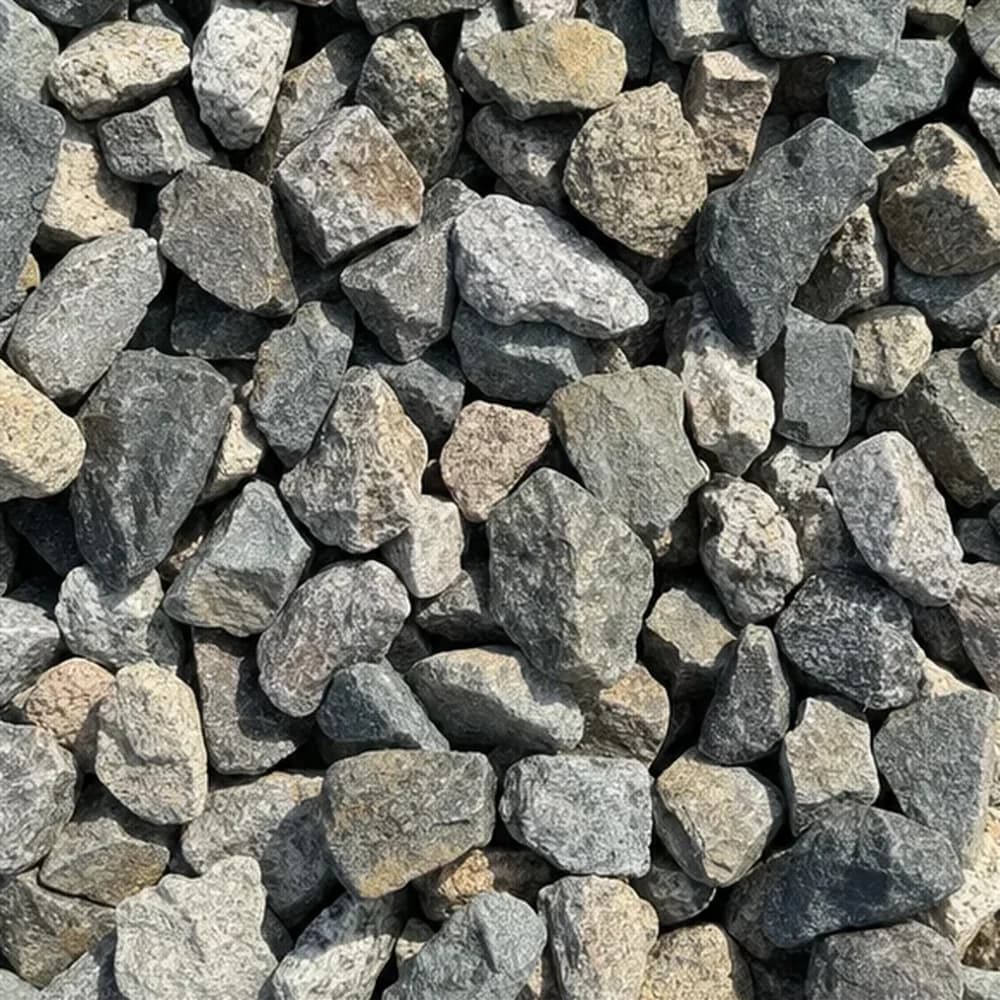
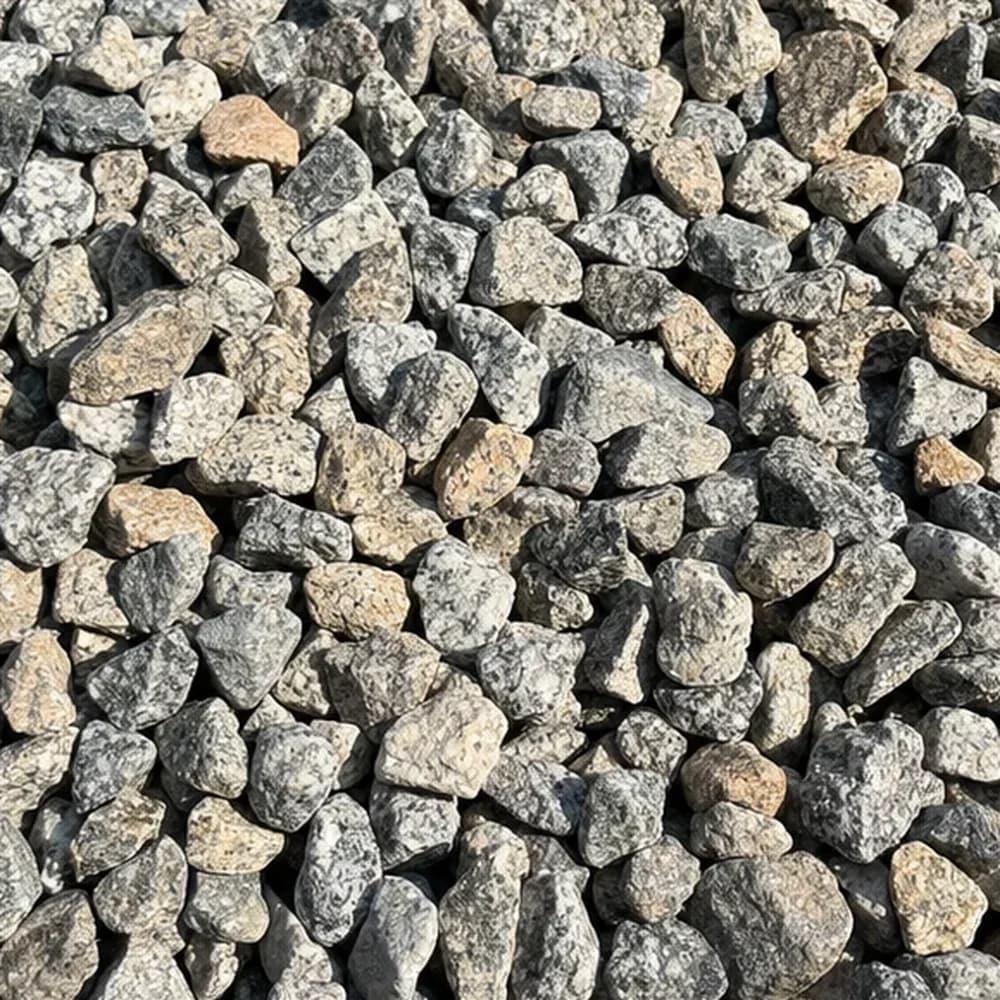
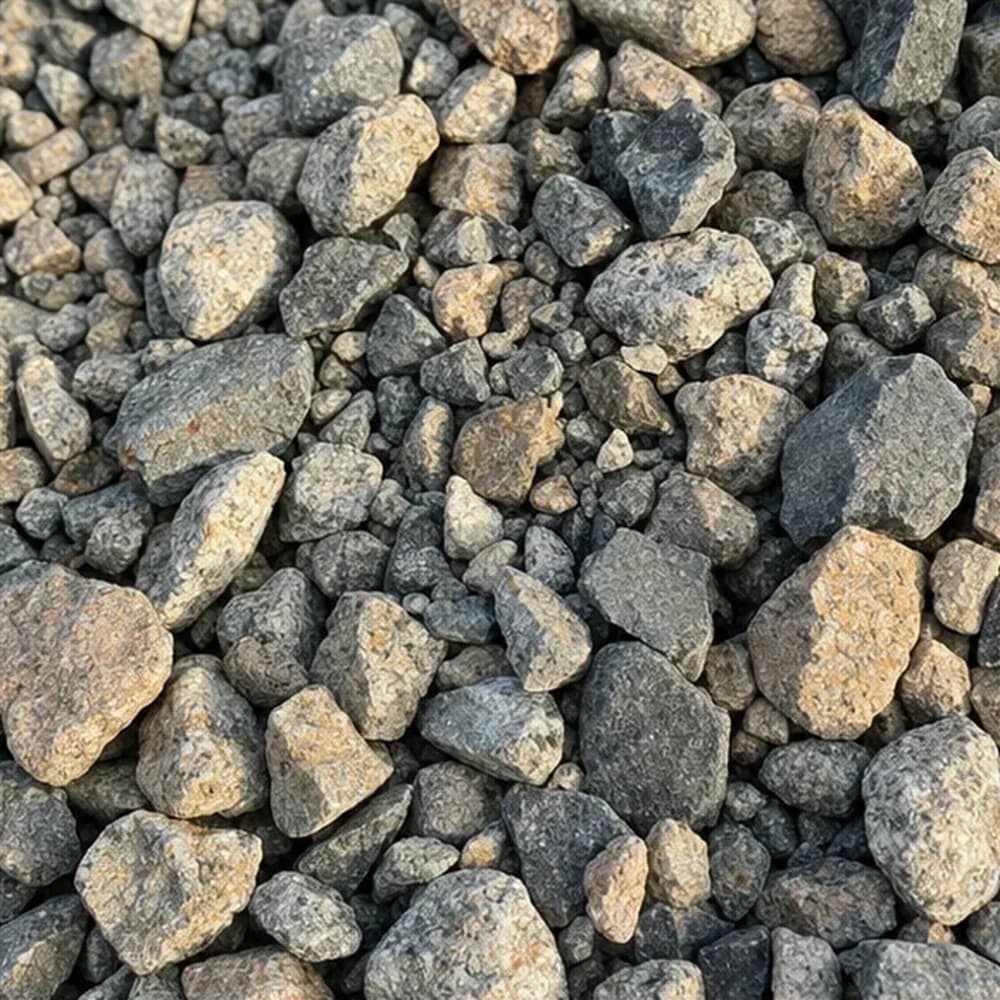
#57 Granite for Georgia Drainage, Pads and Concrete Work
Also sold as #57 Stone
Georgia red clay can hold water and rut under load. #57 Granite helps keep drainage runs clear and supports concrete work around the site.
- Size: 3/16 inch to 1 inch
- Grading: #57
- Type: Angular crushed rock
From $399 for 1 ton, delivery included (larger loads cost significantly less per ton)
Free delivery included
Free delivery anywhere in Georgia
Pick a delivery date
Weekday delivery, earliest Oct 30
“Decided on #57 Granite and I'm really happy with how it turned out. They kept me updated the whole time and the delivery was smooth.”
Heather D. · Verified Buyer
Get a Free Quote
Fill out the form and our sales team will get back to you within the hour.
Size and Grading
- Size
- 3/16 inch to 1 inch
- Grading
- #57
- Type
- Angular crushed rock
By the time someone in Georgia is reading about #57 granite, the choice has usually narrowed to two. Either the money goes into a stone that lets water move through it, or it goes into something that just covers the ground and hopes. On red clay that sheds a downpour fast and then holds water for days once it is saturated, that decision settles most of what happens next in the yard. This is a 3/16 inch to 1 inch angular crushed rock, graded to the #57 size number that GDOT uses to specify crushed stone, and in Georgia that rock is normally crushed granite.
Water that sits in clay instead of soaking away
The Piedmont problem is not rainfall volume, it is what the ground does with it. Red clay subsoil formed from weathered granite and gneiss takes water in slowly, so a heavy summer storm runs off the high ground, collects in the flat spots and then stays. A trench backfilled with anything containing fines does the same thing in miniature: it becomes a long, narrow puddle wrapped in fabric.
Open graded stone solves that because the pieces only touch at their faces. The space between them is continuous, so water entering anywhere along a run has a path to the outlet. Along the Coastal Plain the driver is different, with sandy uplands draining quickly and flat low ground holding a high water table, but the fix is the same: give the water somewhere to travel that does not depend on the soil.
How #57 granite behaves in a trench cut through Piedmont clay
Angular faces are what make this size work. Rounded stone rolls and settles into a tighter arrangement; crushed granite locks against itself and holds the voids open under the weight of backfill above.
That same property makes it useful in concrete, where it is the coarse aggregate that carries compressive load, and behind a retaining wall, where a column of it lets water escape instead of building pressure against the back face. On a pad under a pole barn or equipment shelter, a layer of #57 gives a free-draining course that will not turn greasy, though it is not a substitute for a compacted base underneath where real weight is involved.
What it does not do is pack down into a hard, bound surface. There are no fines in it to do that job. Walk across a fresh layer and it moves underfoot until traffic has seated it.
Cutting a drain run to fall on ground that looks flatter than it is
Cut the trench to a steady fall along its whole length and check it with a level and a string line rather than by eye, because clay banks make a slope look flatter than it is. Line the trench with geotextile fabric, wrapping enough up each side to fold over the top later.
Bed the pipe if the design uses one, then fill around and over it with stone. Fold the fabric across before anything else goes on. That wrap is the part people skip and the part that decides whether the run is still working in five years, because red clay silt migrating into the voids is what kills a drain.
Finish the outlet where water can actually leave: daylight on a bank, a swale, or a place the flow will not simply pond. An apron of larger stone at the outlet keeps the discharge from cutting into bare clay during a thunderstorm.
What silt from a summer thunderstorm does to a drain bed
The upkeep on a stone drainage run is mostly upstream of the stone itself. Bare red clay on a slope above the trench washes fine material down with every storm, and that silt is what eventually plugs the voids. Getting ground cover established above the run does more for the drain's life than anything you can do inside the trench.
On an exposed bed, rinse the surface occasionally to clear granite dust and settled silt. Around a pad or a driveway edge, watch for the stone migrating sideways and reset the edge before the layer thins enough to show clay.
Sizing a fire pit surround, a pole barn pad and a single-car drive
Three hypothetical examples, with the arithmetic shown so you can substitute your own dimensions.
A fire pit surround, 10 feet across with a 4 foot pit in the middle, at 3 inches deep. The ring area is 0.7854 x (10 x 10) minus 0.7854 x (4 x 4), which is 78.54 minus 12.57 = 65.97, call it 66 square feet. Then 66 x (3 / 12) = 16.5 cubic feet, and 16.5 / 27 = 0.61 cubic yards. Order three quarters of a yard.
A pole barn pad 30 feet by 40 feet at 4 inches: 30 x 40 x (4 / 12) = 400 cubic feet, and 400 / 27 = 14.81 cubic yards. Order 15.
A single-car gravel drive 10 feet wide and 60 feet long, taking a 3 inch surface course: 10 x 60 x (3 / 12) = 150 cubic feet, and 150 / 27 = 5.56 cubic yards. Round to 5.5 or 6 depending on how much spare you want for the edges.
For an area that is not a rectangle or a circle, break it into pieces you can measure and add the results. This site's calculator pages put #57 and 3/4 inch crushed stone at roughly 2,800 lb per cubic yard, about 1.40 tons per yard, and on that approximate figure the fire pit ring is 0.61 x 1.40 = about 0.85 tons, the pole barn pad 14.81 x 1.40 = about 20.7 tons, and the drive 5.56 x 1.40 = about 7.8 tons. Check your own length, width and depth against the Stone Calculator. Then pick a quantity and a delivery date on this page. Delivery is set by ZIP code at checkout, and the truck needs clear access to the drop spot, so if the only route in is narrow or steep, raise it through Contact before the day.
Quickly Calculate How Much You Need
Material: #57 Granite
How to Measure
Measure the length and width of your project area in feet
Decide on depth in inches (2" for landscaping, 4" for driveways)
Enter the values above and we'll calculate the tonnage you need
Need help figuring out the right amount? We can help!
Call or text us at (678) 562-7522 and we'll help you calculate the right quantity for your project.
Not sure how much you need? The Stone Calculator has depth guides, coverage charts and worked examples for this material.
Frequently Asked Questions About #57 Granite
Customer Reviews
Ordered #57 Granite from them, they kept me updated the whole time and the material was solid, really happy with it.
Doug P. · Athens, GA · Verified Buyer
Got #57 Granite from Georgia Rock Supply, delivery was right on schedule and the driver was friendly and careful about where he placed it.
Dana I. · Columbus, GA · Verified Buyer
Needed #57 Granite for my driveway and this company made it super easy with free delivery. The #57 Granite was top notch and I'd definitely order from them again.
Dave J. · Athens, GA · Verified Buyer
Decided on #57 Granite and I'm really happy with how it turned out. They kept me updated the whole time and the delivery was smooth.
Heather D. · Athens, GA · Verified Buyer
Picked up some #57 Granite from these guys and everything went smooth. They kept me updated the whole time, good communication and I'd definitely use them again.
Megan P. · Columbus, GA · Verified Buyer
#57 Granite has 5 verified customer reviews with an average rating of 5 out of 5.