Pea Gravel Calculator for Fire Pits, Paths and Play Areas
Enter your project dimensions
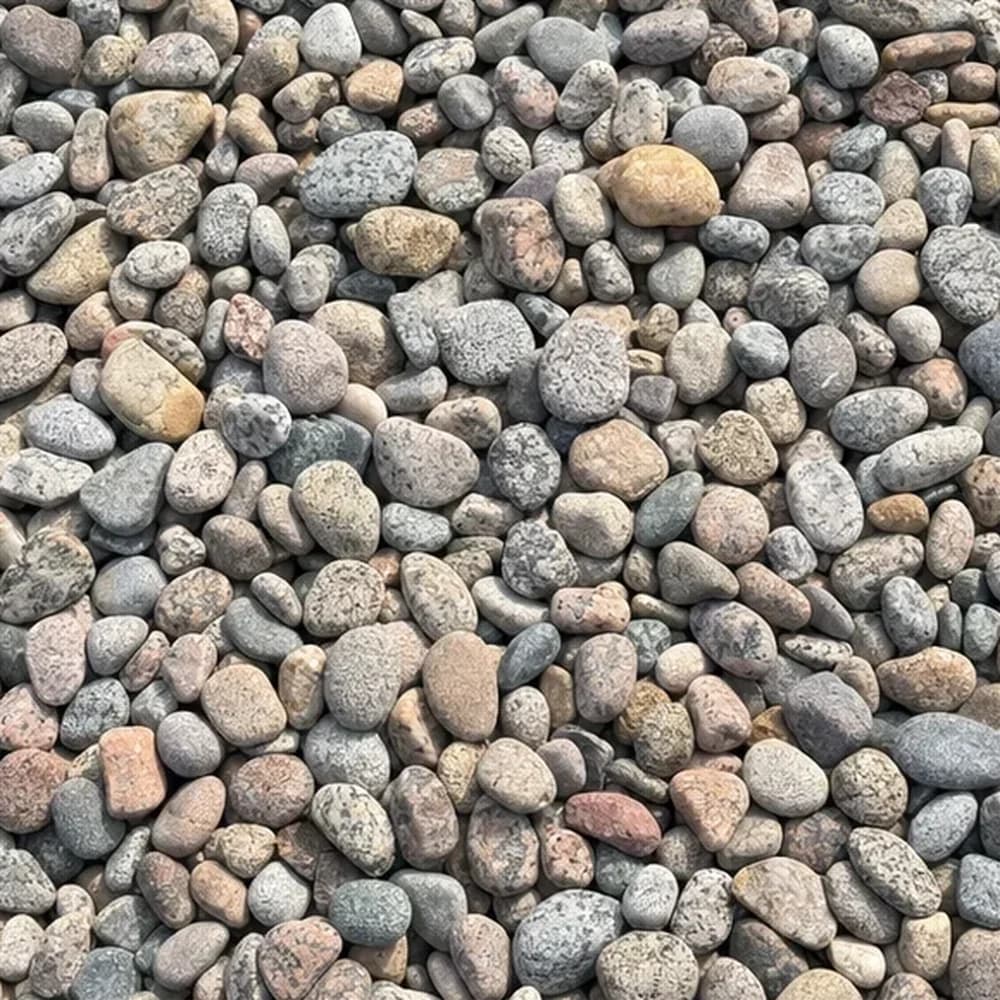
Rounded stone and angular stone behave like two different materials once they are down, and picking the wrong one is a more expensive mistake than mismeasuring by a foot. Pea gravel is smooth 3/8 inch stone. It is kind underfoot around a fire pit and forgiving in a dog run, and on any real slope it travels, which on a Piedmont lot after a summer storm means it ends up in the lawn. Crushed walkway gravel has edges that lock. Sort that out first, then measure.
Pea gravel or crushed walkway gravel: what the ground decides
Flat ground, bare feet, a seating area or a play surface: pea gravel. A path with grade in it, a route that gets wheeled traffic, or a strip that storm runoff crosses: Walkway Gravel or another angular stone, because the pieces wedge against each other instead of rolling.
Once a grade goes past about 5 percent, even edging will not hold rounded stone in place through a heavy rain. A long path can change material where the grade changes, and nobody notices the join once the plants fill in.
River rock is the third thing people weigh this against. It is larger, meant for beds, borders and dry creek beds rather than anywhere people walk, and it has its own river rock calculator at a lighter 1.35 tons a yard. Where the ground is borderline between rounded and angular stone, get help choosing before the load is booked.
Measuring a fire pit circle and a path that bends
A seating circle around a fire pit is the one place the circle shape earns its keep. Measure straight across the finished gravel, through the pit, in feet.
A path that bends is not one rectangle, it is two or three. Break it at the bend, measure each straight run, and enter them with multiple areas, which holds as many as five pieces. A dog run wrapping the corner of a fence goes in the same way. The point is to stop guessing an average width across a shape that changes.
Running it: shape, depth, material, extra
Rectangle asks for length and width in feet, circle for a diameter, multiple areas for up to five pieces. Depth is in inches, anywhere from 0.25 to 24, which covers everything on this page including a deep play zone. Select the material, decide on the tick box marked add 5% extra for compaction and spillage, then read cubic yards, tons and cubic feet. The figures can be emailed if you would rather not write them down.
The depth that keeps footing firm
Two to three inches wherever people walk. Under 2 and the ground shows through in the traffic line within a season. Over 3 and every step sinks, which is the usual reason a gravel patio feels like hard work to cross.
Play areas are the exception and they are not a judgment call: fall zones under equipment want 9 to 12 inches of loose stone, and the equipment manual sets the zone size. At 12 inches a ton covers only about 19 square feet, so that job needs calculating rather than eyeballing. Be clear on what you are buying as well: this is landscape pea gravel, it is not sold as certified playground surfacing, and the required depth, the fall-zone footprint and the maintained depth all come from the equipment manufacturer's instructions rather than from this page.
Under a seating patio, put 2 inches of compacted Screenings down first. Chair legs stop sinking, and on clay it gives the rounded stone something firm to sit on instead of pressing into wet subgrade.
Three shapes, three tonnages
All made-up examples, written out so you can follow the working.
A fire pit circle 12 feet across covers about 113 square feet. At 3 inches: 113 x 3 / 12 = 28.3 cubic feet, which is 1.05 cubic yards. At 1.40 tons a yard that is 1.47 tons, or 1.54 with the 5%.
A garden path in two runs, 24 by 3 feet and 9 by 3 feet, covers 99 square feet. At 2.5 inches: 99 x 2.5 / 12 = 20.63 cubic feet, or 0.76 cubic yards, which is 1.07 tons.
A fall zone 15 by 12 feet at 12 inches covers 180 square feet. 180 x 12 / 12 = 180 cubic feet, or 6.67 cubic yards, which is 9.33 tons. One play area outweighs the fire pit circle and the path together by nearly four times, entirely because of depth.
Same 1.40 as the gravel tool, different advice
Pea gravel weighs about 2,800 lb per cubic yard, or 1.40 tons, on this site's figures. So do crushed stone at #57 and 3/4 inch, and so does driveway gravel. Rounded stone holds less air space than people expect, which is why it weighs much the same as crushed.
That means the gravel calculator will hand you the same tonnage for the same hole. Open this page when you are buying rounded 3/8 stone for a surface people stand on, because the depth guidance and the edging advice are what change. Open the gravel page for drives, base work and drainage.
Edging, and the 5 percent that ends up in the grass
Rounded stone migrates unless something stops it. Steel, aluminum, timber or paver edging standing about an inch proud of the finished surface is what keeps a patio inside its outline. Edging set flush lets stone walk over the top within a season.
Tick the 5 percent box on any pea gravel job. Some of it ends up in the lawn on the way over, some settles into the ground on the first pass, and having a bucket left lets you top up the traffic line next spring instead of ordering again. Rake a gravel surface level twice a year and it stays even.
When your figure looks right, open 3/8" Natural Pea Gravel to choose quantity and a date. Delivery is arranged at checkout by ZIP code, and the truck needs firm ground it can back onto.
Common questions
Can I sanity-check the tonnage before I order?
Multiply the area in square feet by the depth in inches, divide by 12, then divide by 27 for cubic yards, and multiply by 1.40 for tons. The 12 foot circle above lands on 1.05 yards and 1.47 tons whichever way you run it.
The same path in river rock came out lighter. Did I do something wrong?
No. River rock is about 2,700 lb a cubic yard against 2,800 for pea gravel, so the tons drop slightly for identical volume. Always select the material you are buying rather than converting from another one.
Is 5 percent extra enough for a play area?
For spillage, yes. For a fall zone it is not the number that matters most: loose stone compresses and scatters under use, so the depth needs checking and topping up through the year. Treat the 5 percent as delivery margin and plan on a top-up bucket.
My path runs down a bank. How do I measure it?
Measure along the surface, following the fall, rather than across the flat. On a bank that steep, also consider angular walkway gravel or a stabilizing grid under the stone, because pea gravel will creep downhill whatever the tape says.
My dog run is an L shape around the fence. Two calculations?
One, using multiple areas. Enter each leg as its own rectangle, meeting at the corner without overlapping, and the tool totals them.
Related calculators
Under two tons covers most patios.
3/8 inch natural pea gravel, priced by the ton, delivered free.