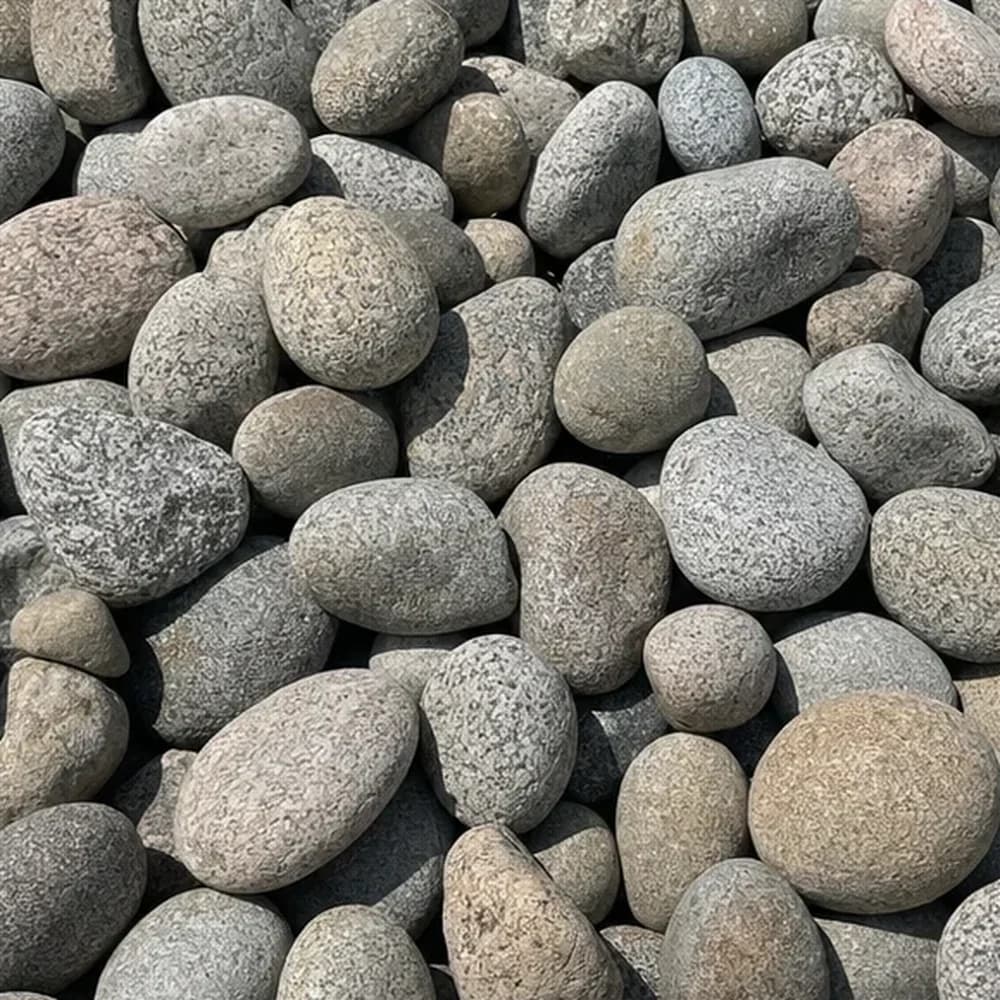
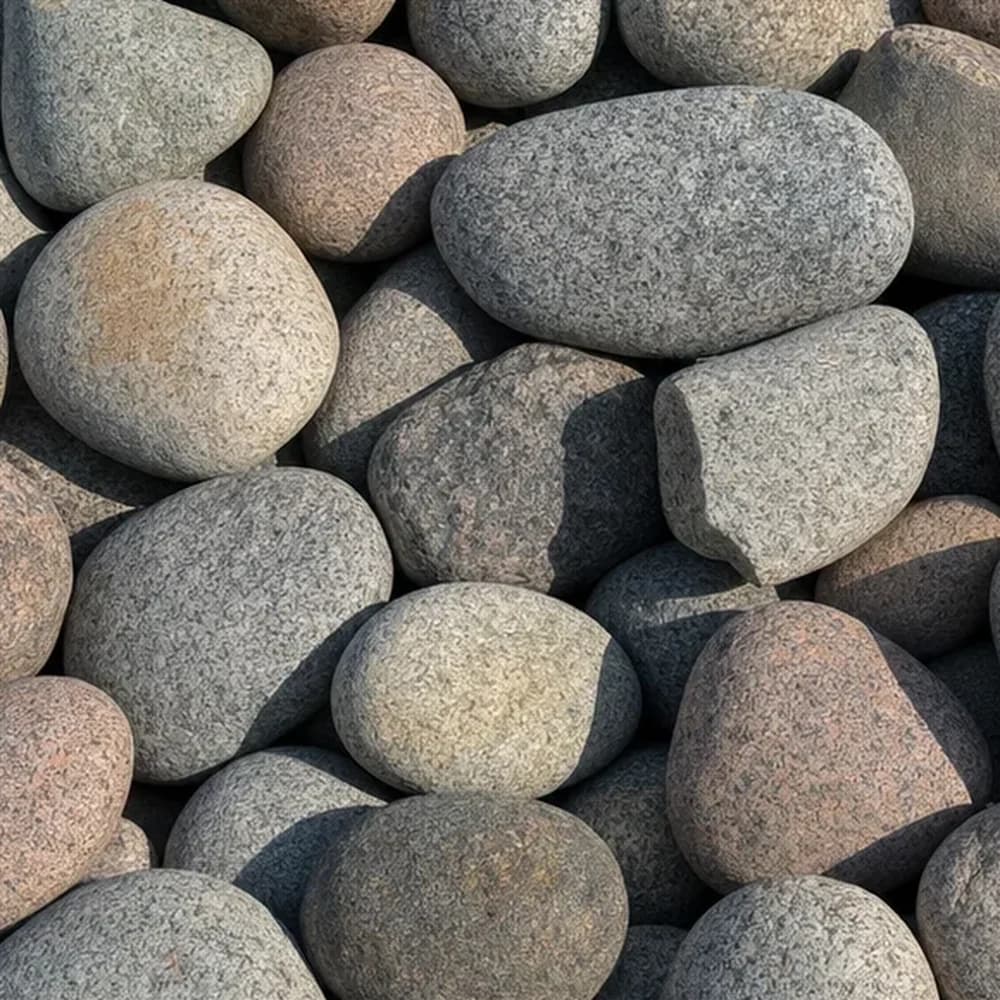
3/8" Natural Pea Gravel for Georgia Paths, Play Areas and Downspout Strips
Do not expect 3/8" Natural Pea Gravel to correct wet Georgia clay; use it where a smooth, freely draining finish is wanted.
- Size: Approximately 3/8 inch
- Type: Small, smooth, naturally rounded stones
- Color: Tans, creams, grays, browns and occasional reds
From $662 for 1 ton, delivery included (larger loads cost significantly less per ton)
Free delivery included
Free delivery anywhere in Georgia
Pick a delivery date
Weekday delivery, earliest Oct 30
“Had no fuss ordering from them, and the natural pea gravel was exactly what I needed. Really happy with how easy the whole thing was.”
Laura H. · Verified Buyer
Get a Free Quote
Fill out the form and our sales team will get back to you within the hour.
Size and Grading
- Size
- Approximately 3/8 inch
- Type
- Small, smooth, naturally rounded stones
- Color
- Tans, creams, grays, browns and occasional reds
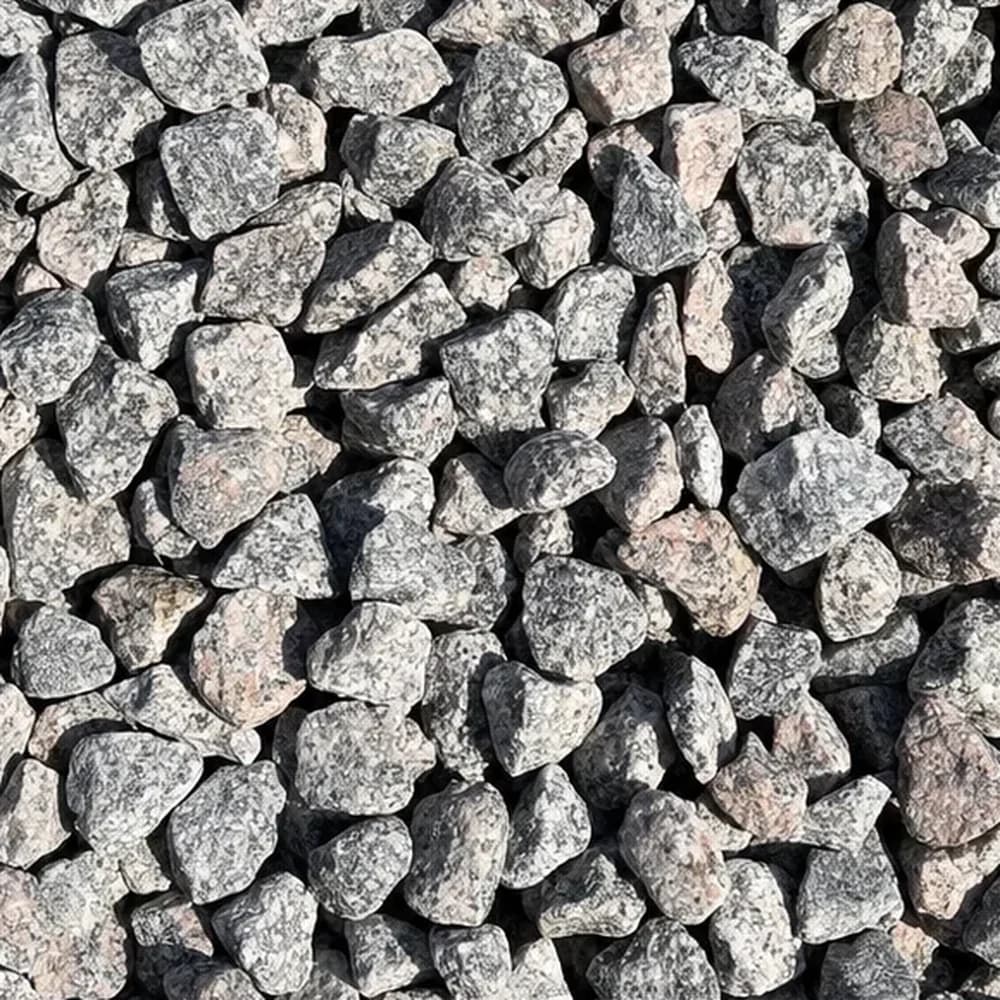
Two bags of 3/8" Natural Pea Gravel and 3/8 inch crushed stone look almost identical in a photograph and behave nothing alike once they are down on Georgia ground. This one is naturally rounded: small, smooth, water-worn stones in tans, creams, grays, browns and the occasional red, with no sharp faces anywhere. That rounding is why it is comfortable underfoot and why it rolls. Crushed stone of the same size has broken faces that lock into each other, so it stays where it is put and feels firm rather than loose. Almost every decision on this page follows from that one difference.
Choose it when people are on it, skip it when wheels are
The straightforward test: if the surface is for feet, this is a good pick, and if it is for tires or a load, it is not.
Choose it for a patio or seating area where the ground should drain and feel informal, for a garden path through planting, for a play area where rounded stone is kinder than angular chips, and for a strip beside a foundation or under a downspout where turf refuses to grow and water has to get away.
Skip it for a driveway, a parking pad, anything a wheelbarrow crosses regularly, or a steep path. Rounded stone shifts underfoot on a grade and under a wheel it simply parts and leaves ruts. Skip it as well in any spot the mower reaches, unless there is a real edge between the two.
Patios, paths and the strip where nothing will grow
On a patio or seating area the finished depth should be enough to cover the ground properly without becoming loose going. Too deep and walking through it feels like sand, too shallow and the base shows through in the first year.
On a path, edge restraint decides everything. Steel, brick, stone or timber along both sides holds the material in the route you built and keeps the shape it had on day one. Without an edge a Georgia thunderstorm and a season of foot traffic will spread a path outward by a foot on each side.
In a play area, depth goes up because the material has to stay put under constant movement. Set a firm boundary and expect to rake it level regularly and top it up every year or two.
Along a foundation or under a downspout, the job is different again: cover ground that stays bare, let water through, and keep mud off the wall. Water arriving from height moves any small stone, so set the edge first and give the water somewhere to go afterwards.
Why 3/8" natural pea gravel is a surface and never a base
Rounded stone has no interlock. Load it and the pieces move past one another rather than bearing against each other, which means a layer of it cannot support anything.
That has two practical consequences. It always needs prepared ground underneath, meaning a shaped, compacted subgrade or a compacted base where the area is going to see real use, with geotextile fabric between the gravel and Georgia clay so the two do not mix. And it never goes under pavers, a shed, a hot tub or a slab, because whatever sits on it will move.
The other thing it cannot do is fix wet ground. Water passes through the gravel easily enough, but red clay underneath still holds what it always held, so a boggy corner covered in pea gravel is a boggy corner with a gravel lid. Deal with the drainage first, then finish the surface.
A construction entrance, a patio base and a dry creek bed all want something else
Three jobs come up often enough to be worth naming, and none of them is this material.
A construction entrance has to knock mud off tires and carry loaded trucks, which needs large angular rock. That is #4 Crushed Stone or Railroad Ballast over fabric.
A paver patio base needs a compacted load bearing layer and a screeded setting course: Crusher Run underneath and Screenings on top of it. Rounded gravel under pavers guarantees movement.
A dry creek bed wants stone with enough size and weight to stay put when water runs through the channel, plus the varied look that makes the feature read naturally. Use River Rock, with Large River Rock for the edges and the deeper sections.
Where pea gravel does belong near those jobs is the path alongside the creek bed, or the seating area beyond the paving.
Yards and tons for a 14 by 10 sitting area and a 40 foot path
Hypothetical examples, worked so the arithmetic carries over to your own measurements. The calculator pages on this site put pea gravel at roughly 2,800 lb per cubic yard, which is about 1.40 tons per yard, and that approximate figure converts the volumes below.
A sitting area 14 feet by 10 feet at 3 inches: 14 x 10 = 140 square feet, 140 x (3 / 12) = 35 cubic feet, and 35 / 27 = 1.30 cubic yards, which is about 1.8 tons.
A garden path 40 feet long and 3 feet wide at 2 inches: 40 x 3 = 120 square feet, 120 x (2 / 12) = 20 cubic feet, and 20 / 27 = 0.74 cubic yards, close to 1 ton.
A play area 12 feet by 12 feet at 4 inches: 12 x 12 = 144 square feet, 144 x (4 / 12) = 48 cubic feet, and 48 / 27 = 1.78 cubic yards, roughly 2.5 tons.
Order a little over the calculated figure for anything with an edge to it, since the perimeter always takes more than the flat middle. Check your own numbers in the Pea Gravel Calculator, then pick a quantity and a delivery date on this page, and mention a narrow side gate or a long wheelbarrow run through Contact beforehand. Delivery is arranged at checkout by ZIP code, and the truck needs clear access to the drop spot.
Quickly Calculate How Much You Need
Material: 3/8" Natural Pea Gravel
How to Measure
Measure the length and width of your project area in feet
Decide on depth in inches (2" for landscaping, 4" for driveways)
Enter the values above and we'll calculate the tonnage you need
Need help figuring out the right amount? We can help!
Call or text us at (678) 562-7522 and we'll help you calculate the right quantity for your project.
Not sure how much you need? The Pea Gravel Calculator has depth guides, coverage charts and worked examples for this material.
Frequently Asked Questions About 3/8" Natural Pea Gravel
Customer Reviews
Ordered natural pea gravel from these guys and it was no hassle at all. Delivery was smooth, the material looked great, and I'd definitely use them again.
Sandra E. · Athens, GA · Verified Buyer
Had no fuss ordering from them, and the natural pea gravel was exactly what I needed. Really happy with how easy the whole thing was.
Laura H. · Columbus, GA · Verified Buyer
Grabbed some natural pea gravel from Georgia Rock Supply and it looks great around my walkway. Free delivery was a nice surprise and everything showed up right when they said it would. I'd definitely order from them again.
Carlos K. · Columbus, GA · Verified Buyer
Had natural pea gravel delivered by Georgia Rock Supply and ordering was no fuss. The natural pea gravel was just what I ordered, really happy with it.
Kelly G. · Macon, GA · Verified Buyer
Got natural pea gravel from them and ordering was simple. They kept me updated the whole time, and I'm really happy with how it all turned out.
Ryan T. · Sandy Springs, GA · Verified Buyer
3/8" Natural Pea Gravel has 5 verified customer reviews with an average rating of 5 out of 5.