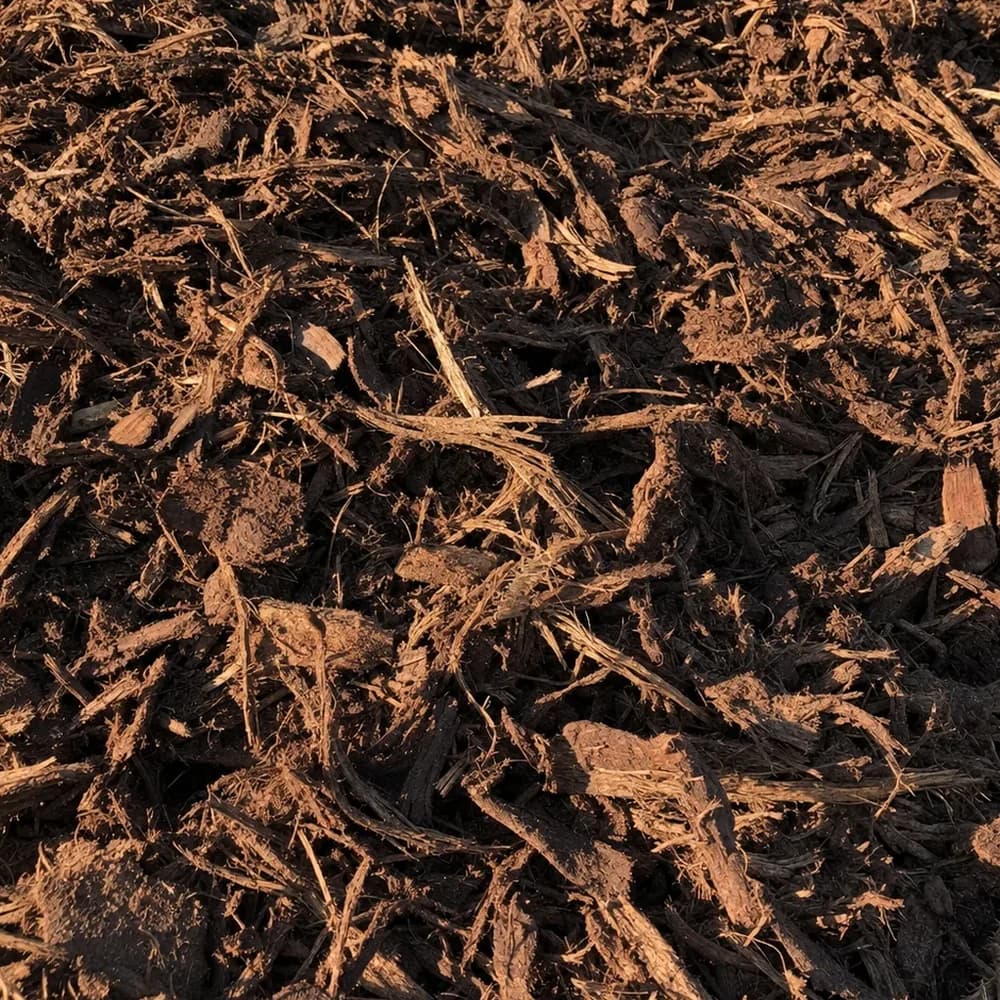
Mulch Calculator for Curved Beds, Tree Rings and Bag Counts
Enter your project dimensions
Nobody's foundation bed is a rectangle. It bulges at the corner of the house, pinches behind the downspout, and runs out to a tree ring that used to be part of the lawn. That shape is the reason mulch gets bought in bags: a cart of bags feels like something you can judge by eye, and a cubic yard does not. This page closes that gap in both directions, so you can measure the beds as they actually sit and read the answer in yards or in bags, whichever you were about to buy.
Squaring off a bed that curves around the house
Draw the bed as the rectangle that would just contain it, then trim. A border that swings from 3 feet wide at the ends to 5 at the bulge averages 4, and the average is what goes in the width box. Beds are shallow, so an error of a foot costs you a wheelbarrow, not a load.
Tree rings are easier than they look. Switch the shape to circle and measure straight across the ring, through the trunk, in feet. Rings get added as separate areas rather than guessed as one lump, all at the one depth the run is set to.
Adding several beds without three trips to the tool
Multiple areas holds as many as five pieces at once, and mulch is the job it was built for. Front border, side bed, two tree rings and the strip by the mailbox go in together and come back as one yardage.
Everything else runs the same way it does on the other calculators here: length, width or diameter in feet, depth in inches between 0.25 and 24, a material select, the tick box marked add 5% extra for compaction and spillage, then cubic yards, tons and cubic feet in the result. There is an email option under the figures if you would rather have them sent than copied down.
The depth that gets a bed through a Georgia July
Two inches over last year's layer, once you have raked the old crust open. Three inches on bare ground, which is what holds moisture through the hot end of summer and keeps weed seed in the dark. Four inches is the ceiling: deeper than that and the layer stays wet against the roots underneath.
Two habits matter more here than the arithmetic. Keep mulch 3 to 6 inches clear of a tree trunk, shaped as a flat ring rather than a cone against the bark. And beside the house, hold it 2 to 3 inches deep and keep it back from the siding, below the slab line.
On a Piedmont slope, the mulch type matters as much as the depth. Shredded hardwood knits together and stays put; nuggets and chips ride a thunderstorm downhill and end up on the drive. For a bed that sheds its cover every summer, decorative stone instead of mulch is the usual answer.
Yards on the truck, bags in the trunk
A cubic yard is 27 cubic feet. A garden center bag holds 2 cubic feet. Divide and you get 13.5 bags to the yard, and that one conversion is what most people come here for.
Say a foundation border runs 38 feet long and averages 3.5 feet wide, mulched 3 inches deep. That is 133 square feet. 133 x 3 / 12 = 33.25 cubic feet, which is 1.23 cubic yards, or about 17 bags at 2 cubic feet each.
Now the tree rings. Four rings 5.5 feet across at 3 inches: each ring covers about 23.8 square feet, so 95 square feet together. 95 x 3 / 12 = 23.8 cubic feet, which is 0.88 cubic yards, or roughly 12 bags. Both of these are made-up examples, run out so the math is visible.
Why the ton line barely moves on this page
Shredded mulch weighs about 600 lb per cubic yard, which is 0.30 tons. It is the lightest thing on this site by a long way: a yard of crusher run runs about 3,000 lb, five times the weight in the same hole.
That is why mulch is sold and delivered by volume. The tons figure still appears in your result because every calculator here returns all three units, but with mulch it is the cubic yards line that matters when you order. Read the yards, glance at the bag count, and leave the tonnage to the stone pages.
If the bed is being built rather than covered, mulch is the wrong tool for the first half of the job. Size the bed soil before the mulch goes down on the soil calculator, get it worked in and planted, then come back here for the layer that goes over the top.
Two more beds: a spring refresh and a play surface
A whole-yard refresh over about 500 square feet of existing beds, at 2 inches: 500 x 2 / 12 = 83.3 cubic feet, or 3.09 cubic yards. That is roughly 42 bags, and about 0.93 tons on the scale, which tells you why the bag route stops making sense somewhere well below that.
A play surface is the exception to every depth figure above. Fall zones under equipment want at least 6 inches of loose material and a product certified for playground use, so treat that as its own calculation and follow the equipment manual for the zone size. A stone path or surround beside that zone is sized on the pea gravel calculator instead.
One practical note before you order: a three-yard pile takes about the footprint of a parked car, and shredded mulch can stain fresh concrete, so lay a tarp on the drive first. Spread it within a week or two rather than letting it sit and sour. When the yardage looks right, open Shredded Mulch to set quantity and date. Delivery is arranged at checkout by ZIP code, the order is matched to a supplier in the network near that address, and an agent confirms the exact delivery address before the load goes out; how delivery works covers what the truck needs at your end. Soil, sand and stone on the same job have their own tools on the page that holds all material calculators.
Common questions
How do I check the bag count by hand before I order?
Work out each bed's square footage, multiply by the depth in inches, divide by 12, then divide by 27 for cubic yards. Multiply that by 13.5 for 2-cubic-foot bags, or by 9 for 3-cubic-foot bags. The 133 square foot border above comes out at 1.23 yards and about 17 bags either way.
I ran the same beds through the gravel tool once and the tonnage was completely different. Why?
Volume is the same for every material; weight is not. Mulch is about 600 lb a cubic yard and crushed stone about 2,800, so identical beds at identical depth give nearly five times the tons. Always select the material you are actually buying.
Does mulch need the 5 percent extra, or is that only for stone?
It is worth ticking on a big spread. Mulch does not compact the way stone does, but some always ends up on the lawn, in the wheelbarrow and against the fence. The extra also gives you enough to top the bed behind the garage that everybody forgets.
The beds run down a slope behind the house. What do I measure?
Measure along the face of the slope rather than across it, which adds a little area on any real slope. On a bank steep enough to walk sideways on, stay with shredded hardwood and rake it into the slope, because a summer downpour will move a loose layer.
Can I total an L-shaped border in one go?
Yes, that is what multiple areas is for. Enter each leg as its own rectangle and do not let them overlap at the corner, or you will pay for the same corner twice.
Related calculators
Skip the 27-bag cart.
Bulk shredded hardwood by the yard, tipped in your driveway, delivery free.