Road Base Calculator: Sizing a Lane, Not a Patio
Enter your project dimensions
The order this page has to fix most often is the one sized by instinct. Someone who has laid a patio in the back yard pictures a few tons and goes looking for a quote, then finds the drive out to the county road wants a figure with a different number of digits in front of it. Base is bought by area times depth, and a lane has a great deal more of both than anything behind the house.
A shed pad and a drive to the road, nine loads apart
Two made-up jobs, written out so the arithmetic shows.
A pad for a garden shed, 12 by 16 feet, based at 4 inches compacted. That is 192 square feet. 192 x 4 / 12 = 64 cubic feet, which is 2.37 cubic yards. At 1.50 tons a yard it lands on 3.56 tons.
A drive from the house to the road, 110 feet long and 11 feet wide, at 6 inches compacted. That is 1,210 square feet. 1,210 x 6 / 12 = 605 cubic feet, or 22.41 cubic yards, which is 33.61 tons. Leave the 10% box ticked and it reads 36.97.
Same material, same yard, and the drive takes nearly ten times the pad. Length is doing most of that and the extra two inches of depth is doing the rest, which is why both numbers deserve a tape rather than a guess.
Feeding the tool a lane, a turnaround and an apron
Rectangle takes a length and a width in feet. For a lane, walk the length along the centerline and take the width in a few places, then use the average rather than the widest point. Circle takes a diameter in feet, which covers a round turning area or a grain bin pad. Multiple areas holds up to five pieces, so a straight run with a turnaround at the top, or a drive with an apron at the gate, goes in as one calculation instead of three.
Depth is entered in inches, from 0.25 to 24. Choose the material, leave the box marked add 10% extra for compaction and spillage ticked, or untick it, and press the button. Cubic yards, tons and cubic feet come back together, and there is an option under the result to have the figures emailed rather than copied onto the back of an envelope.
Depth set by what drives on it, and by how wet the clay gets
Four inches compacted suits light residential ground that stays firm. Six is the everyday figure for cars and the trucks that bring furniture and mulch. Eight to twelve is what soft or wet subgrade asks for, and what to use anywhere a tractor, a trailer or a loaded container spends time sitting still.
Red clay is the reason so many Georgia lanes end up at the upper end. It sheds a summer thunderstorm fast while the surface is shaped and crowned, then holds the water that does soak in and goes soft underneath. Strip the topsoil and organic material before any stone goes down, since mud will otherwise work up through the layer whatever its thickness, and put woven geotextile between clay and stone on any stretch that has rutted before. Build in lifts of 4 inches or less, roll each one, and crown the finished surface 2 to 3 percent from the centerline so storm runoff leaves at the edges rather than sinking into the base.
Cubic yards, tons and the 1.50 that sits between them
Volume comes first and it never changes: length times width in feet, times depth in inches, divided by 12 for cubic feet, divided by 27 for cubic yards. Tons come out of that last step. Graded aggregate base runs about 3,000 lb to the cubic yard here, which is where the 1.50 tons a yard comes from.
Pick a different material and only the ton line moves. Clean crushed stone at about 2,800 lb a yard converts at 1.40, so the same 22.41 yards would read 31.37 tons instead of 33.61. The hole has not changed. The stone in it has.
Ordering long instead of ordering twice on a clay lane
The 10% box covers spillage, the stone that misses the pad on a tight turn, and the low spot that reads deeper than the tape suggested. It is not a compaction correction, because the depth you type should already be the finished rolled thickness rather than the loose spread.
On a lane order, round up after that. Say the drive above is 90 feet of running lane plus a 20 by 24 foot turnaround at the house: 900 plus 480 is 1,380 square feet, which at 6 inches is 690 cubic feet, 25.56 cubic yards and 38.33 tons, or 42.16 with the 10% ticked. Being two tons short on a job that size means chasing a second delivery for a strip you could have covered on the day, and a lane over clay usually wants a touch-up in its first wet season anyway.
GAB, crusher run and the stone that finishes the top
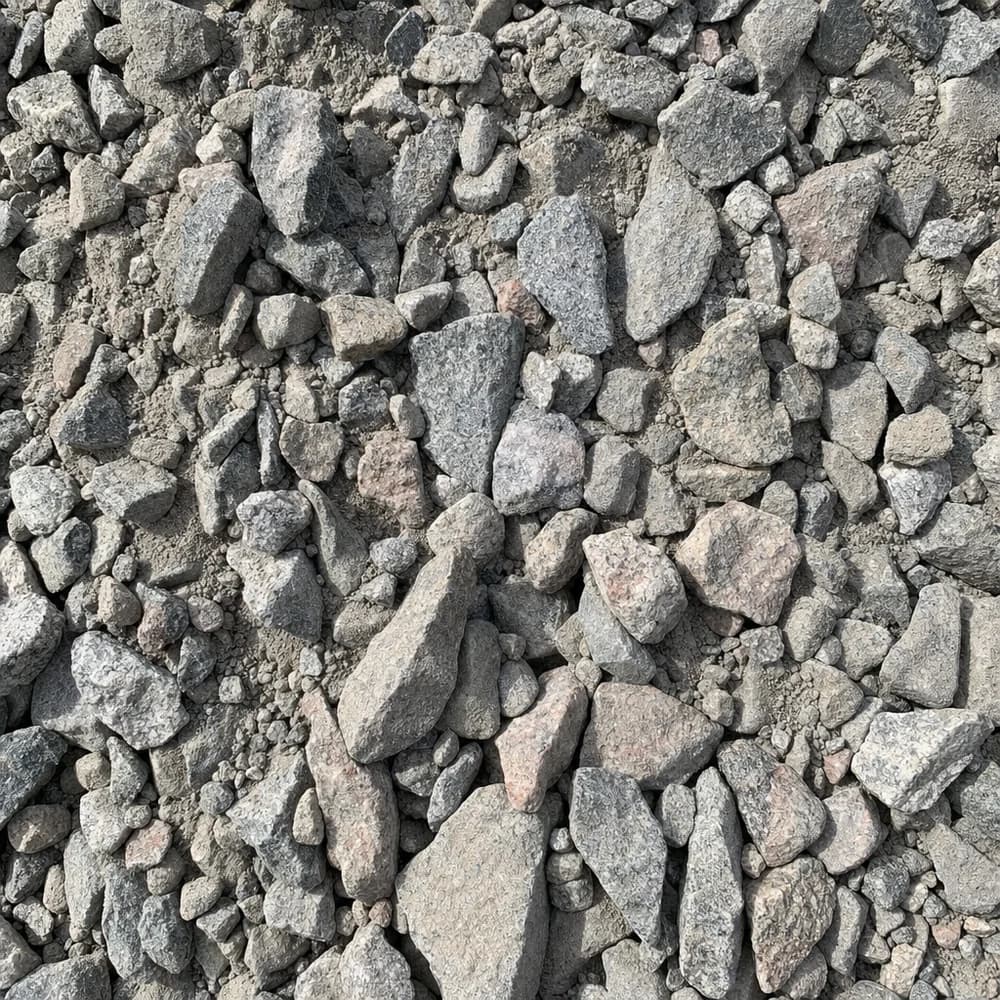
The base material Georgia plans and tickets call for is graded aggregate base, written GAB and specified by GDOT under Section 815. It is listed here as GAB (Graded Aggregate Base) and it is what this tool is built around.
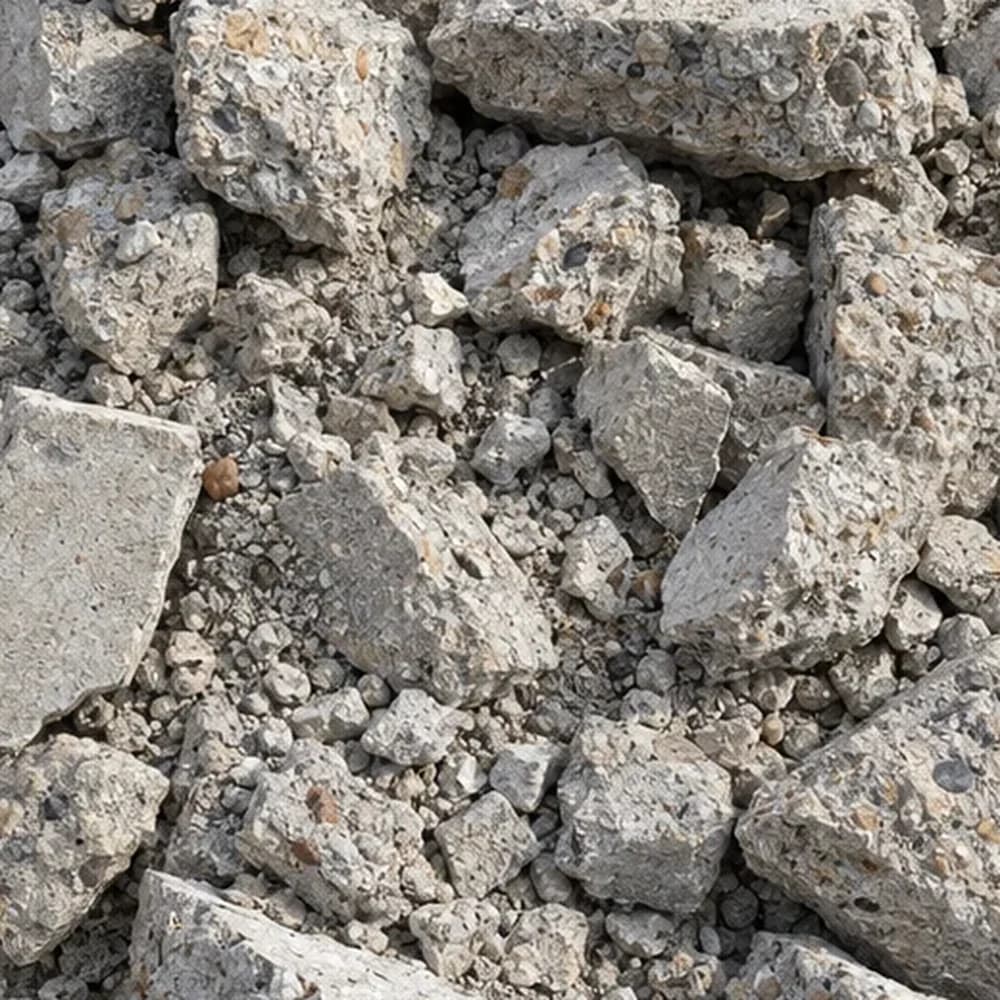
Crusher Run, which older hands call crush and run, is the same family of crushed stone with its fines left in, and it converts at the same 1.50 tons a yard, so what separates them is the job rather than the number: GAB carries the load under a lane, and the finer mix screeds flat under pavers. The crusher run calculator frames the same arithmetic around walkway bases and small pads where close grading matters; open this page when the job is a lane, a drive or a yard where equipment parks. What neither one should do is drainage: the fines that make them bind also hold water, so a French drain wants clean #57 granite instead. For a finished driving surface with less dust, plan a separate 2 to 3 inch top course of driveway gravel and run it through the tool as its own layer.
Once the figure settles, open the product page to set quantity and date. Delivery is arranged at checkout by ZIP code, and what the truck needs on arrival is a firm, clear spot to tip on.
Common questions
The tons changed when I picked the top course instead of the base. Is that right?
Yes. Volume is identical and weight is not. Graded aggregate base is figured at 1.50 tons a cubic yard because its fines fill the gaps between stones; clean driveway gravel and #57 granite come in around 1.40. Same lane, same depth, lighter ticket.
Is the ten percent box doing anything on a thirty ton lane order?
More than it looks like. Ten percent of 33.61 tons is nearly 3.4 tons, which is roughly the last 12 feet of a 10-foot lane at 6 inches. Leave it ticked on any base you are rolling, then round the result up to a whole ton on top of that.
The drive climbs from the road up to the house. What length goes in?
The distance along the ground you are surfacing, following the climb, not the flat distance you would read off a plat. On a steep run that adds several feet, and it is also the stretch that washes first after a heavy storm, so it is worth the walk with a tape.
The lane opens out into a turnaround at the top. How do I total both?
Use multiple areas. Enter the running lane as one rectangle and the turnaround as a second, meeting but not overlapping where they join, or as a circle if it is genuinely round. The tool adds up to five pieces and gives you one tonnage.
Do the grass shoulders either side of the lane belong in the width?
Only where stone is actually going. Most lanes want the base run a few inches past the wheel tracks on each side so the edge does not crumble under a tire, so measure to where you intend to stop the stone rather than to the fence line.
Related calculators
Thirty tons. Zero delivery fees.
Road base priced per ton, hauled free, at lane quantities where hauling usually costs the most.