#8 Crushed Stone: The No-Fines Size for Georgia Drainage Details
For drainage through Georgia red clay, #8 Crushed Stone provides free drainage around pavers and serves in concrete mixes.
- Size: About 3/32 inch to 3/8 inch
- Grading: #8, clean with little to no fines
- Type: Crushed stone
From $456 for 1 ton, delivery included (larger loads cost significantly less per ton)
Free delivery included
Free delivery anywhere in Georgia
Pick a delivery date
Weekday delivery, earliest Oct 30
“Went with this company for crushed stone and I'm really glad I did. The crushed stone was exactly what I needed, and the delivery showed up without any hassle. I'd definitely order from this company again.”
Tom F. · Verified Buyer
Get a Free Quote
Fill out the form and our sales team will get back to you within the hour.
Size and Grading
- Size
- About 3/32 inch to 3/8 inch
- Grading
- #8, clean with little to no fines
- Type
- Crushed stone
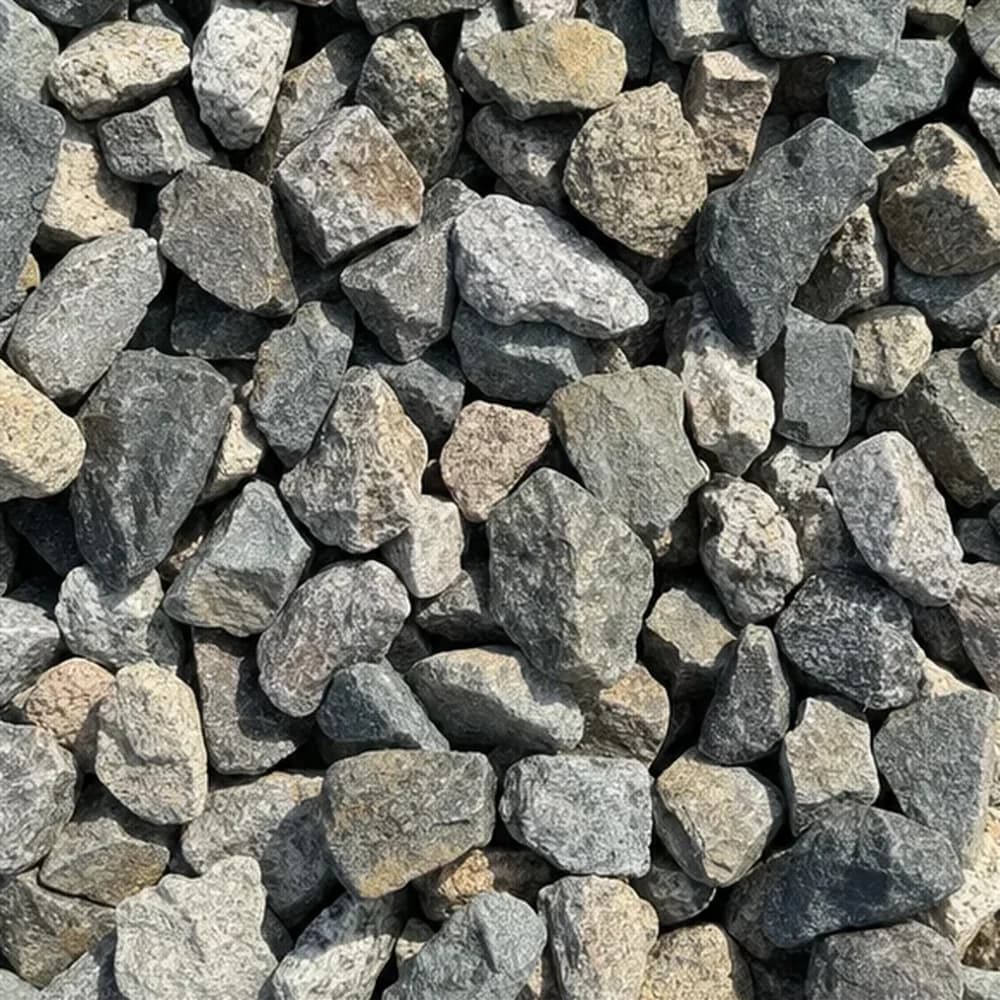
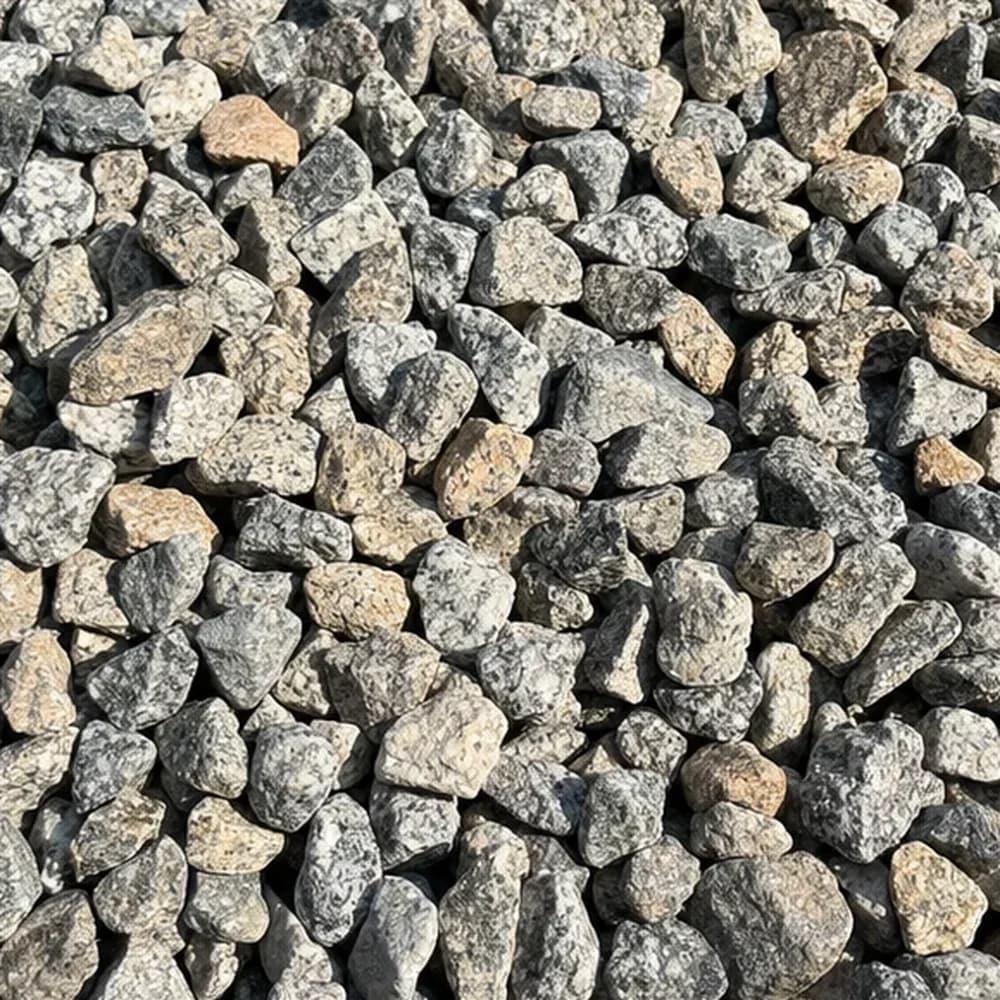
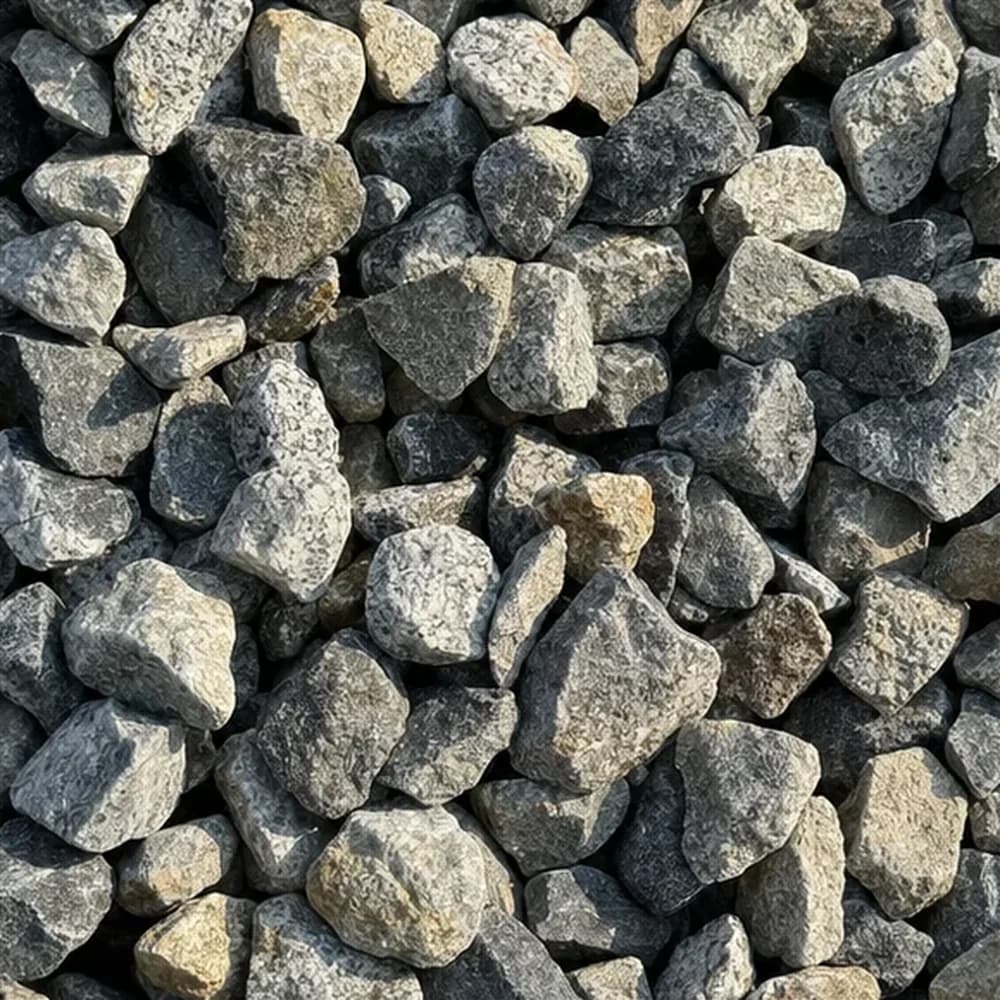
Tip a ton of it onto a driveway in Marietta and the pile behaves like a bucket of marbles: it spreads flat, the pieces slide past one another, and there is no dust cloud because there is almost nothing in it small enough to make one. That single quality is what a Georgia hardscape crew buys #8 crushed stone for. Red clay sheds a summer downpour across the surface rather than taking it in, so anything built to move water needs an aggregate with open space between the pieces, and this one is graded between roughly 3/32 inch and 3/8 inch with little to no fines.
Why does a fresh load rattle when you walk on it?
Pick a handful up and you get clean faces, similar sizes and no gray coating on your palm. A crushed stone that carries fines feels different: the small stuff fills the gaps, the pile holds its shape, and the material packs tight when a plate compactor goes over it.
This one will not do that, and the whole point is that it will not. Water moving through a drainage layer needs a continuous route between the pieces. Fines block that route, and in a trench cut through Piedmont clay the fines will arrive on their own soon enough from the soil around the work.
So the rattle underfoot is a sign the load is right rather than a fault. It also tells you what the stone cannot do, which matters more than what it can.
Where does #8 crushed stone belong on a red clay lot?
Four jobs, and they all share the same logic.
Permeable paver bedding is the first: the thin setting course the pavers rest on, in a system designed to let rain drop through the surface rather than run off it. The joints between those pavers take the same stone, brushed in.
Pipe bedding is the second. A line laid straight onto a clay trench floor takes its support from a few high points; bedded on open stone, it is carried along its whole length and the water around it keeps moving.
A drainage layer under or behind hardscape is the third, in the part of the build where water is meant to leave. The fourth is concrete work, where a mix calls for a small coarse aggregate.
What ties all four together is that none of them is a wearing surface. Nobody stands directly on this stone when the job is finished.
How much does a 12 by 34 permeable boat pad take?
Here is a hypothetical example, arithmetic shown so you can swap in your own measurements. The calculator pages on this site put crushed stone in this family at roughly 2,800 lb per cubic yard, about 1.40 tons per yard, and that approximate figure gives the tonnage below.
A permeable paver pad for a boat and trailer, 12 feet by 34 feet, with a 2 inch bedding course of #8 underneath the pavers: 12 x 34 = 408 square feet. Then 408 x (2 / 12) = 68 cubic feet, and 68 / 27 = 2.52 cubic yards, which is close to 3.5 tons.
The joints draw from the same pile and take an unpredictable amount, most of it in the first two sweeps before the stone settles. Ordering three yards instead of two and a half, roughly 4.2 tons, covers the bedding and leaves enough for the joints and the top-up after the first storm.
The open sub-base beneath that bedding course is a separate, larger stone and a separate order. Sizing the two together is what the Stone Calculator is for.
Will it hold a long rural lane together?
No, and a lane is the most expensive place to find that out. A 400 foot drive back to a barn takes weight, turning tires and water running down its length. Clean single-size stone with no fines has nothing to bind it, so it pushes out sideways under a wheel, collects in the low spots and leaves the crown bare within a season.
A lane wants a compacted binding material. Crusher Run or GAB (Graded Aggregate Base) builds the body of it, with Driveway Gravel as the surface course. Where the lane crosses ground that stays soft after a wet week, the first course wants something much coarser, which is #4 Crushed Stone.
Is it the right stone for a garden path?
Not on its own. A path surfaced with clean 3/32 to 3/8 inch stone stays loose underfoot, rolls when you turn on it, and works its way into the beds on either side. Walkway Gravel is the graded path material, and it settles because it contains a range of sizes rather than one.
There is a version of the path question where #8 is exactly right, and that is a permeable paved path: pavers or slabs designed to drain through their joints, with this stone in the joints and in the setting course below. If the finished surface is the paving and the stone is hidden, it belongs. If the stone is the surface you walk on, it does not.
How do I settle the tonnage and get it on a truck?
Measure the paved area rather than the whole project, since the bedding course only goes where the pavers go, and measure depth after you have decided how thick the setting course will be. Put length, width and depth into the calculator, read the tons, then add a margin for joint fill.
When the number is settled, choose a quantity and a delivery date on this page. Delivery is arranged at checkout by ZIP code, covered on the delivery page, and the truck needs a clear spot to tip where the pile will not sit in mud. If the only way into the back garden is a side gate, raise it through Contact before you book a date, because this stone is carried by wheelbarrow and the route matters more than the tonnage.
Quickly Calculate How Much You Need
Material: #8 Crushed Stone
How to Measure
Measure the length and width of your project area in feet
Decide on depth in inches (2" for landscaping, 4" for driveways)
Enter the values above and we'll calculate the tonnage you need
Need help figuring out the right amount? We can help!
Call or text us at (678) 562-7522 and we'll help you calculate the right quantity for your project.
Not sure how much you need? The Stone Calculator has depth guides, coverage charts and worked examples for this material.
Frequently Asked Questions About #8 Crushed Stone
Customer Reviews
Had crushed stone delivered by the team, and it was just what I ordered.
Maria S. · Sandy Springs, GA · Verified Buyer
Went with this company for crushed stone and I'm really glad I did. The crushed stone was exactly what I needed, and the delivery showed up without any hassle. I'd definitely order from this company again.
Tom F. · Augusta, GA · Verified Buyer
Decided on crushed stone for a driveway project and ordered from them. Delivery was easy, the crushed stone looked great, and everything landed right where I needed it. I'd definitely order again and recommend them to anyone needing bulk material.
Tara M. · Savannah, GA · Verified Buyer
Got crushed stone from Georgia Rock Supply and the quality was great. Price was fair too, felt like a good value for what I got.
Luis V. · Savannah, GA · Verified Buyer
Had crushed stone delivered by them and they kept me updated the whole time. Price was fair too, definitely felt like good value.
Frank A. · Atlanta, GA · Verified Buyer
#8 Crushed Stone has 5 verified customer reviews with an average rating of 4.8 out of 5.