Railroad Ballast for Georgia Pads, Lanes and Wet Crossings
Set Railroad Ballast in the supporting stone course of Georgia equipment pads and access routes where wet red clay calls for drainage beneath load.
- Size: Roughly 1 inch to 2.5 inches
- Grading: Graded to interlock under load while draining freely
- Type: Large angular crushed stone
From $430 for 1 ton, delivery included (larger loads cost significantly less per ton)
Free delivery included
Free delivery anywhere in Georgia
Pick a delivery date
Weekday delivery, earliest Oct 30
“Decided on railroad ballast from them and I'm really happy with it, the driver was friendly and careful about placement, and I'd definitely order again and recommend them.”
Rachel P. · Verified Buyer
Get a Free Quote
Fill out the form and our sales team will get back to you within the hour.
Size and Grading
- Size
- Roughly 1 inch to 2.5 inches
- Grading
- Graded to interlock under load while draining freely
- Type
- Large angular crushed stone
Anyone running a lane back to a barn, a shed or an equipment yard in this state knows the stretch that gives trouble. It is the flat piece where two slopes meet, or the place a seep crosses, and it holds water long after the rest of the property has dried out. Red clay there loses its strength under a loaded truck and the ruts come back every wet season no matter how much drive stone goes on top. Railroad ballast is one of the few materials heavy enough to change what happens in that stretch.
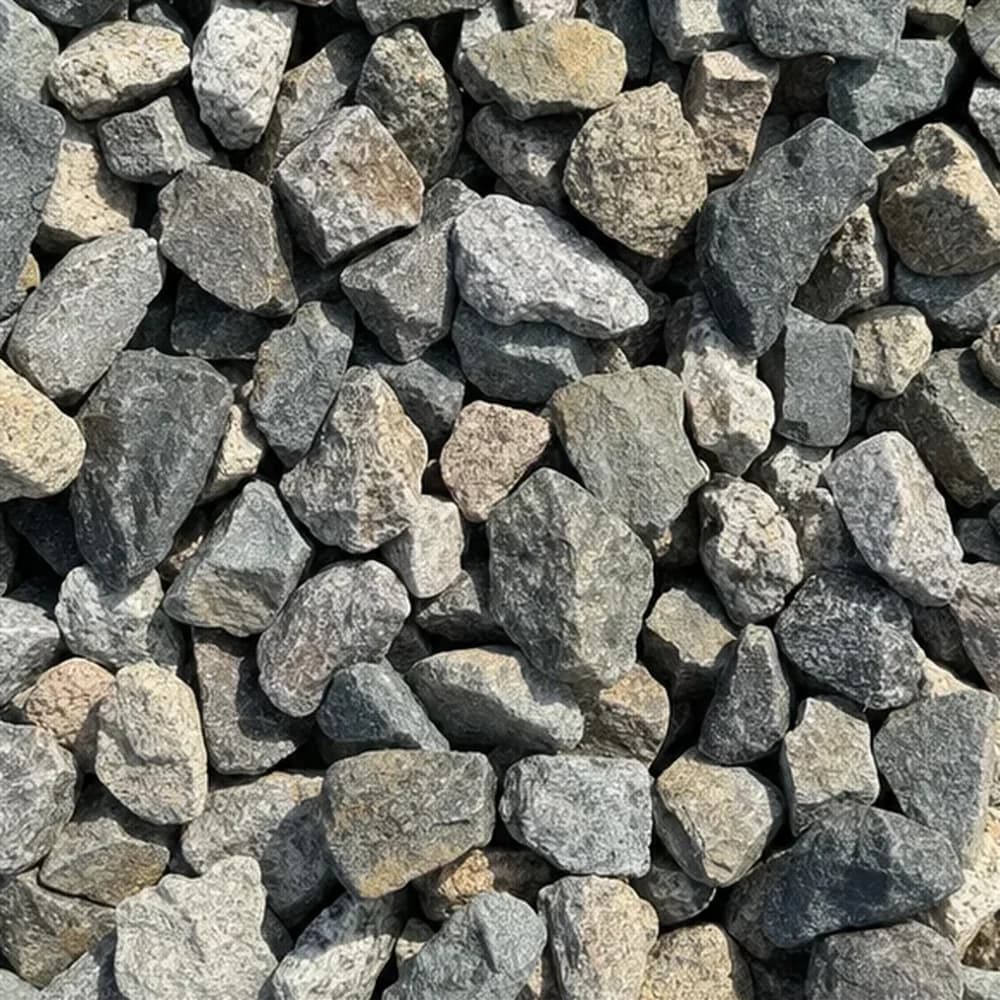
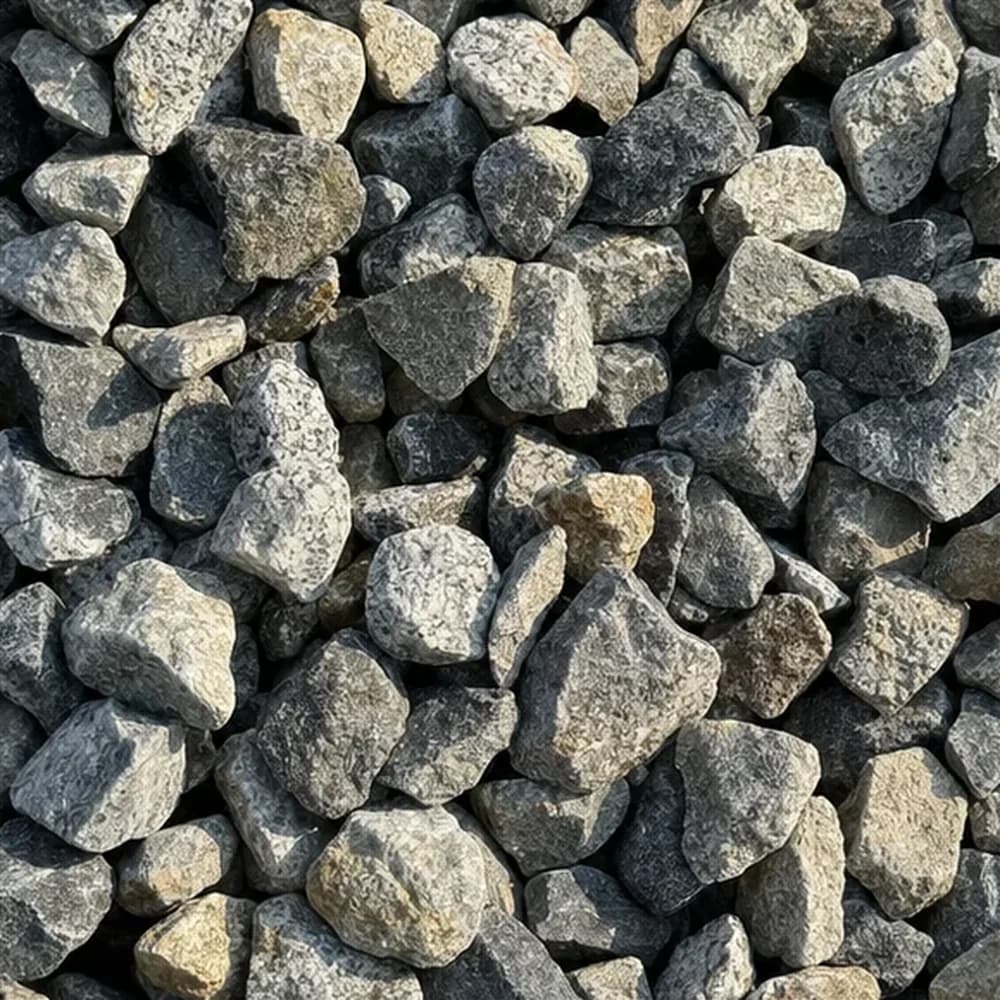
What a fresh drop of railroad ballast looks like beside a load of drive stone
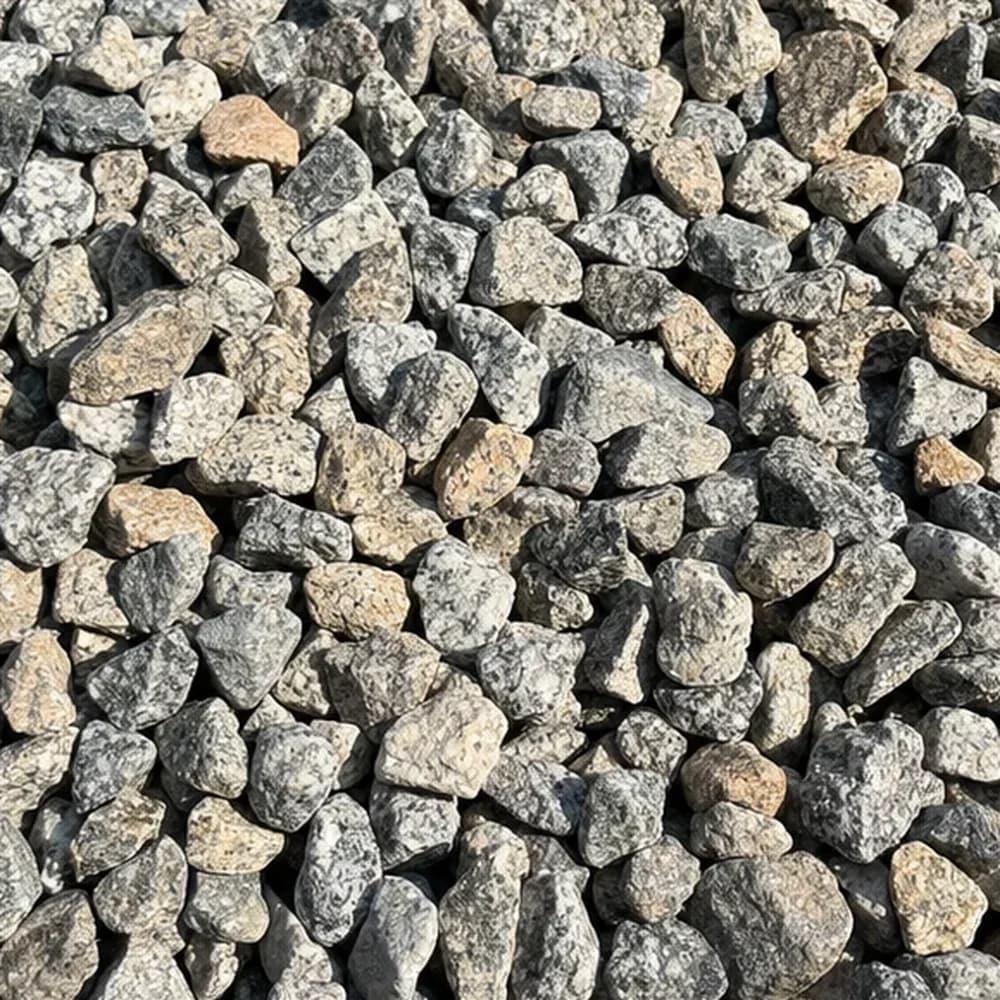
Tip a load out and the difference from a driveway material is obvious from across the yard. This is large angular crushed stone running roughly 1 inch to 2.5 inches, with clean faces and sharp corners, and a pile of it looks coarse and open rather than dusty.
It is graded to interlock under load while still draining freely, which is the balance the material is built around. The pieces key into each other so the layer holds its shape under weight, and the gaps between them stay open enough that water leaves rather than sits.
Underfoot it is uneven. This never becomes a smooth top course, it is uncomfortable to walk across, and it is not a material you pick for how a yard looks from the house.
Turnarounds, equipment pads and the lane back to the shed
The clearest use on a Georgia property is anywhere heavy things sit or turn on ground that gets wet. A turnaround or parking pad for a truck and trailer is the common one: the stone spreads the load over soft clay and keeps a defined footprint instead of spreading mud outward every winter.
Equipment pads work the same way. So does a stretch of access lane through a low crossing, where the point is to get wheels across without cutting into the clay underneath. Where a job involves track, the stone holds ties in position while water drains away from the bed.
It also suits broad drainage areas that have to carry weight at the same time, which is the situation no lighter stone handles well.
Where a French drain or a yard regrade wants something else
Two jobs that look like matches are not.
A French drain along a foundation is the first. This stone is too large for a trench of that size: it leaves voids that soil falls into and it makes an awkward bed around a perforated pipe. That trench wants #57 Granite or Drain Rock over fabric, at a size the pipe and the trench walls can work with.
A low spot or a yard regrade is the second. If the finished surface will be lawn or bed, bringing the level up is a job for Fill Dirt with soil capped over it, and dropping heavy stone into a hollow you intend to mow is a decision you will regret at the first pass. Use ballast in a regrade only where the finished area has to carry vehicles.
Planning depth on clay that stays soft under a loaded truck
Depth is a function of the ground, not of the stone. On firm ground that drains, a working layer is modest. Over clay that stays soft through a wet week, the layer has to be deep enough to spread the load until the pressure reaching the clay is something the clay can carry, and that means excavating rather than mounding.
The sequence over soft ground is the same one that works for any heavy layer here: cut out the soft material, lay geotextile fabric across the bottom, place the stone, then level it. The fabric is what keeps the clay and the stone from mixing, and without it a deep layer still fails after a few storm cycles.
Frost is not part of the calculation. Freezes are light across most of Georgia and the residential code sets a 12 inch minimum footing depth, so water in the clay and the weight crossing the surface are what decide thickness.
Tons for a 30 by 24 turnaround and a wet lane crossing
Both hypothetical, worked through so the arithmetic is easy to repeat with your own measurements. The calculator pages on this site give #4 stone and railroad ballast as roughly 2,900 lb per cubic yard, which is about 1.45 tons per yard, and that approximate figure converts the volumes below.
A turnaround 30 feet by 24 feet at 6 inches: 30 x 24 = 720 square feet, 720 x (6 / 12) = 360 cubic feet, and 360 / 27 = 13.33 cubic yards, which comes to about 19.3 tons.
A wet stretch of lane 60 feet long and 10 feet wide at 8 inches: 60 x 10 = 600 square feet, 600 x (8 / 12) = 400 cubic feet, and 400 / 27 = 14.81 cubic yards, close to 21.5 tons.
Loads this size arrive on a large truck, so the drop spot matters as much as the quantity. Check your own figures in the Stone Calculator, pick a tonnage and a delivery date on this page, and raise a narrow bridge, a soft verge or a tight turn through Contact before the day. Delivery is arranged at checkout by ZIP code and the driver needs clear access to the spot where the pile will land.
What goes above it, and what goes beside it
Ballast is rarely the finished layer. Where vehicles will use the surface regularly, cap it with a compactable material such as Crusher Run or GAB (Graded Aggregate Base) so tires meet something tight rather than loose rock.
Where the job is purely drainage under a pad, #4 Crushed Stone covers much of the same ground at a slightly smaller size and is easier to work. Where water is cutting a bank or leaving a culvert with force, the answer is heavier again and belongs to RipRap. Matching the stone to the job is usually cheaper than buying the largest thing available.
Quickly Calculate How Much You Need
Material: Railroad Ballast
How to Measure
Measure the length and width of your project area in feet
Decide on depth in inches (2" for landscaping, 4" for driveways)
Enter the values above and we'll calculate the tonnage you need
Need help figuring out the right amount? We can help!
Call or text us at (678) 562-7522 and we'll help you calculate the right quantity for your project.
Not sure how much you need? The Stone Calculator has depth guides, coverage charts and worked examples for this material.
Frequently Asked Questions About Railroad Ballast
Customer Reviews
Decided on railroad ballast from them and I'm really happy with it, the driver was friendly and careful about placement, and I'd definitely order again and recommend them.
Rachel P. · Columbus, GA · Verified Buyer
Got railroad ballast from the team and the price felt fair for the amount I needed. Free delivery was a nice bonus and it showed up when they said it would.
Tom P. · Athens, GA · Verified Buyer
Got railroad ballast from the team and the delivery showed up right on schedule. Price was fair, especially for the amount I needed. Really happy with how easy the whole thing was.
Angela W. · Athens, GA · Verified Buyer
Grabbed railroad ballast from them and it showed up clean and consistent. Driver was friendly and took his time placing it right where I needed it.
Steve C. · Savannah, GA · Verified Buyer
Needed railroad ballast for a project and Georgia Rock Supply made ordering simple. Delivery showed up when expected and the railroad ballast was exactly what I needed.
Ashley J. · Atlanta, GA · Verified Buyer
Railroad Ballast has 5 verified customer reviews with an average rating of 4.8 out of 5.