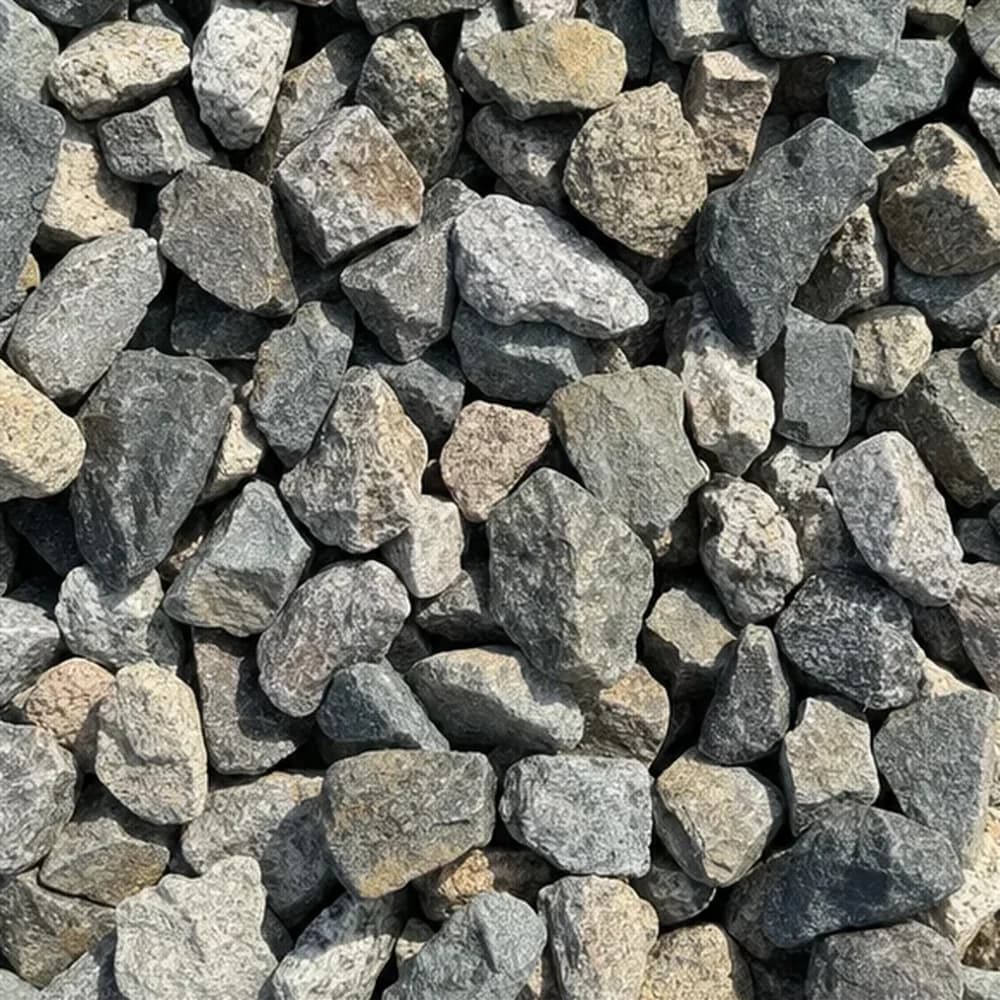
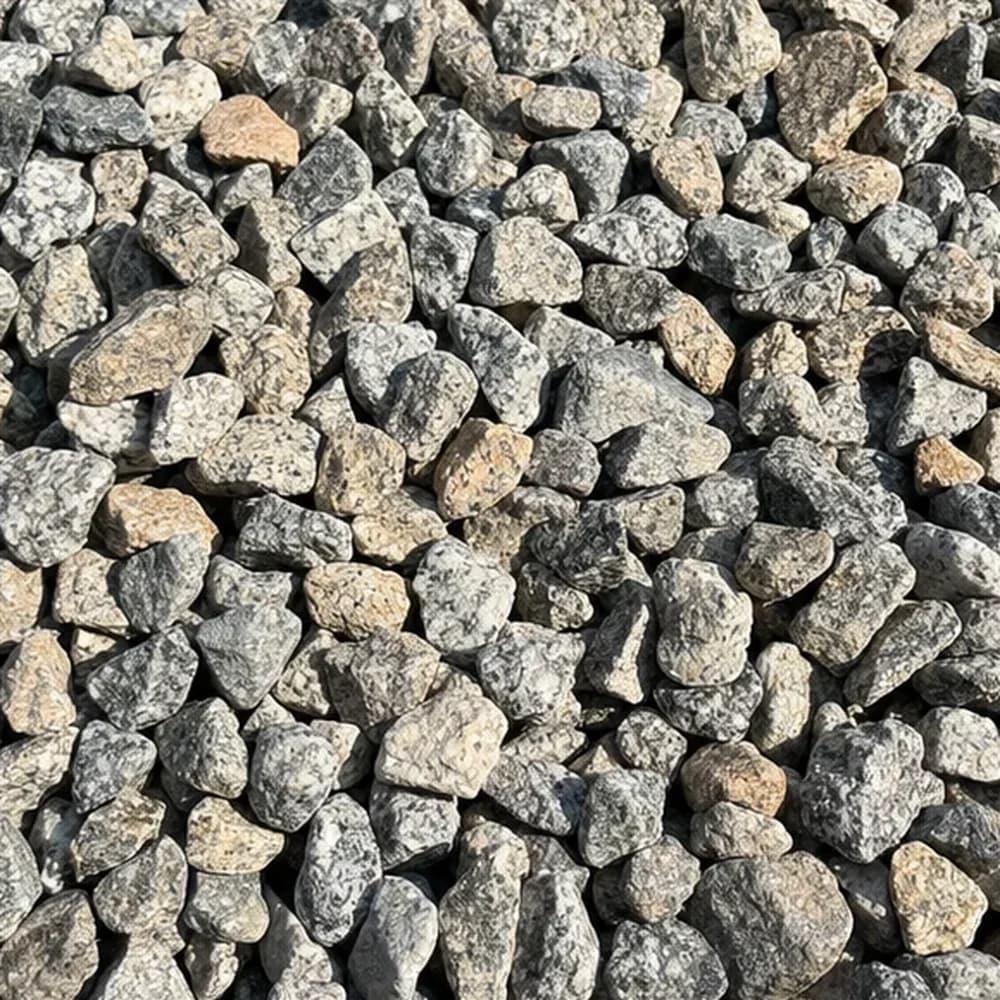
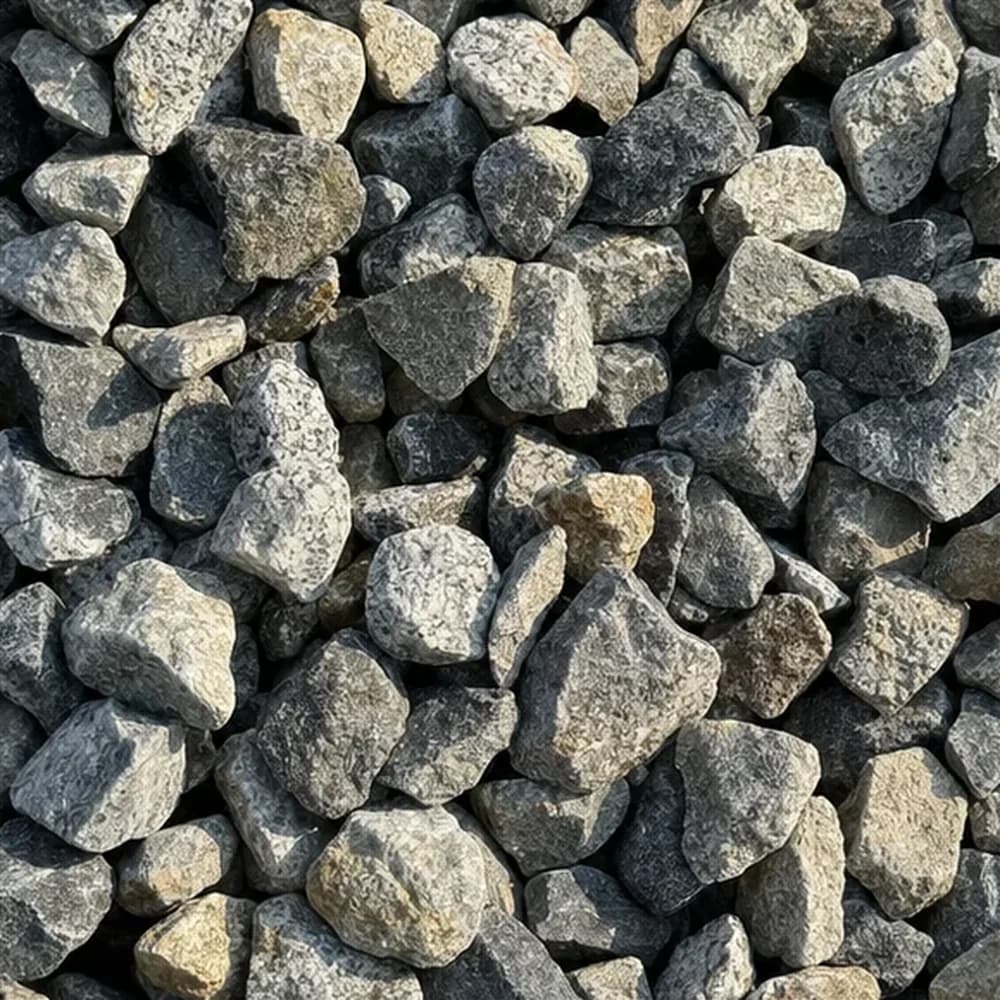
Drain Rock for Georgia Trenches, Wall Drains and Wet Ground
Set Drain Rock in the drainage zone behind walls or along a trench in Georgia, where red clay can hold water against the work.
- Size: 3/4 inch to 1-1/2 inch
- Grading: Washed to remove fines and dust
- Type: Rounded or angular varieties
From $389 for 1 ton, delivery included (larger loads cost significantly less per ton)
Free delivery included
Free delivery anywhere in Georgia
Pick a delivery date
Weekday delivery, earliest Oct 30
“Decided on drain rock from the team and I'm really happy with how it turned out. The driver was friendly and careful about where he placed it, which saved me a lot of extra work. Easy 5 out of 5 from me.”
Kelly A. · Verified Buyer
Get a Free Quote
Fill out the form and our sales team will get back to you within the hour.
Size and Grading
- Size
- 3/4 inch to 1-1/2 inch
- Grading
- Washed to remove fines and dust
- Type
- Rounded or angular varieties
The ground most Georgia readers are fighting is red clay that took a storm's worth of water in twenty minutes and is still holding it four days later. Water runs off the surface, collects wherever the grade flattens, and then sits against whatever is in its way: a crawlspace wall, a wall footing, a patio edge, the low corner where the yard meets the fence. Drain rock exists for the trench you cut to give that water a route out. It runs from 3/4 inch to 1-1/2 inch and it is washed, so the dust and fine material that would otherwise occupy the spaces between the pieces have been taken out.
Drain rock next to #57 granite, 3/4 inch stone and river rock
Four materials on this site can end up in a wet trench, and they are not interchangeable.
#57 Granite is the workhorse and the closest substitute. It is an open stone in a similar family, and a great many French drains in this state are built with it. Drain rock is the larger, washed version, sold specifically because it has been cleaned rather than merely screened.
3/4" Crushed Stone is the structural cousin. Choose it where the layer has to carry weight as well as pass water, such as behind a wall supporting a driveway. Choose drain rock where the only job is water.
River Rock turns up in trenches because it is what people have left over from a bed. Rounded stone drains, but it settles under load and its smooth faces do not hold voids the way broken ones do, so it belongs in an exposed decorative channel rather than a buried structural drain.
Within drain rock itself there is one more choice. Angular pieces interlock and keep their open structure under the weight of backfill, which is what a wall drain or a deep trench wants. Rounded drain rock suits exposed landscape drainage where the stone will be looked at.
Where it earns its keep: trenches, walls and crawlspace perimeters
A French drain is the obvious one. A perforated line in a fabric-wrapped trench, surrounded by open stone, intercepting water before it reaches something you care about and taking it to daylight at the low end.
Behind a retaining wall, the stone forms a vertical drainage column against the back of the block, so the wall is holding soil rather than soil plus a season of trapped rainwater.
Around a foundation or a crawlspace, a perimeter drain does the same job at footing level, moving groundwater away rather than letting it stand against the wall. In the Piedmont, where clay holds water against the structure long after the storm has gone through, that is usually the difference between a damp crawlspace and a dry one.
Septic drainage is the fourth use. Treat it as a separate category: those systems are designed and permitted work, and the stone spec comes from the design and the county rather than from a product page.
Where a garden walk runs over a line that always seeps
Here is the job this product quietly does most often in a suburban yard. A flagstone walk runs from the drive round to the back garden, and one stretch of it crosses a low line where water always comes through. The flags are fine everywhere else and permanently soft there.
The fix is not under the flagstone, it is beside it. Cut a trench along the uphill edge of that stretch, line it with geotextile fabric, set a perforated line falling toward an outlet, surround it in drain rock, fold the fabric over the top and cap it. The walk is then crossing drained ground instead of a spring.
The bedding under the flags themselves is a separate material and a separate order. That is Screenings, or Washed Sand, neither of which is this.
Raised beds and a play area want something else entirely
Two jobs people ask about that should not get a load of washed stone.
A raised vegetable bed does not want a gravel layer in the bottom. Stone under soil in a container does not improve drainage; it creates a boundary that holds water in the soil above it, which is the opposite of the intention. Fill the bed with Garden Soil and, if the bed sits in a corner that stays wet, deal with the ground around it using a trench rather than the inside of the box.
A playground surface is a harder no. Washed 3/4 to 1-1/2 inch stone is sharp-cornered and loose, and children land on it. Shredded Mulch is the cushioned option for a play area, and Mason Sand is the traditional alternative.
Working out how much trench you are actually filling
Depth is set by the design rather than by a rule of thumb: where the water is coming from, how deep the thing you are protecting sits, and how much fall you can find between the trench and its outlet. What matters for ordering is that you are filling a volume, not covering an area, so a deep narrow trench eats far more than its footprint suggests.
Fabric first, then a layer of stone on the trench floor, then the pipe, then stone over and around it, then the fold of fabric and the cap. The pipe should be sitting on stone rather than on clay, and the stone should be continuous from below the line to above it.
Tons for a 60 foot trench and a 25 foot wall drain
Hypothetical examples with the arithmetic shown. The site's calculator pages do not list drain rock separately, so the tonnages below use the closest listed family, crushed stone at roughly 2,800 lb per cubic yard or about 1.40 tons per yard, and should be treated as approximate.
A French drain 60 feet long in a trench 18 inches wide, stone filling 14 inches of that trench: 60 x 1.5 = 90 square feet of trench footprint. Then 90 x (14 / 12) = 105 cubic feet, and 105 / 27 = 3.89 cubic yards, roughly 5.4 tons. The pipe displaces a little of it, so 4 yards is a comfortable order.
A drainage column behind 25 feet of retaining wall, 12 inches thick and 30 inches high: 25 x 1 = 25 square feet in plan. Then 25 x (30 / 12) = 62.5 cubic feet, and 62.5 / 27 = 2.31 cubic yards, about 3.2 tons.
Put your own trench dimensions into the River Rock Calculator, which is the tool this product is matched to on the site, and read the tons from there.
Getting a washed load into the trench still washed
The value of this stone is what is not in it, so the delivery day is about keeping it that way. A pile tipped onto bare red clay picks up a coating the first time a wheelbarrow wheel churns the edge, and that coating ends up in the voids.
Tip it on the drive or on a tarp, not on the lawn and not on the spoil heap from the trench. Have the trench open, the fabric laid and the pipe to hand before the truck comes, so the stone is handled once. Then pick a quantity and a delivery date on this page. Delivery is arranged at checkout by ZIP code, explained on the delivery page, and if the trench is in a back garden reached through a gate, raise it through Contact before you book, because every yard of this is going in by wheelbarrow.
Quickly Calculate How Much You Need
Material: Drain Rock
How to Measure
Measure the length and width of your project area in feet
Decide on depth in inches (2" for landscaping, 4" for driveways)
Enter the values above and we'll calculate the tonnage you need
Need help figuring out the right amount? We can help!
Call or text us at (678) 562-7522 and we'll help you calculate the right quantity for your project.
Not sure how much you need? The River Rock Calculator has depth guides, coverage charts and worked examples for this material.
Frequently Asked Questions About Drain Rock
Customer Reviews
Ordered drain rock from these guys and it showed up right when I needed it. I'd definitely order again and recommend them.
Maria G. · Columbus, GA · Verified Buyer
Went with these guys for drain rock, and the driver was friendly and careful about where he dropped it.
Nicole T. · Sandy Springs, GA · Verified Buyer
Decided on drain rock from the team and I'm really happy with how it turned out. The driver was friendly and careful about where he placed it, which saved me a lot of extra work. Easy 5 out of 5 from me.
Kelly A. · Sandy Springs, GA · Verified Buyer
Ordered drain rock from the team and it was an easy 5 out of 5. The driver was friendly and careful about where he dropped it, which I really appreciated. Pricing felt fair too, good value for the amount I got.
Tara E. · Sandy Springs, GA · Verified Buyer
Grabbed a load of drain rock from this company and the price felt fair for what I got. The driver was friendly and took his time placing it right where I needed it.
Carlos H. · Atlanta, GA · Verified Buyer
Drain Rock has 5 verified customer reviews with an average rating of 4.8 out of 5.