Large River Rock for Georgia Dry Creeks, Ditch Lines and Feature Beds
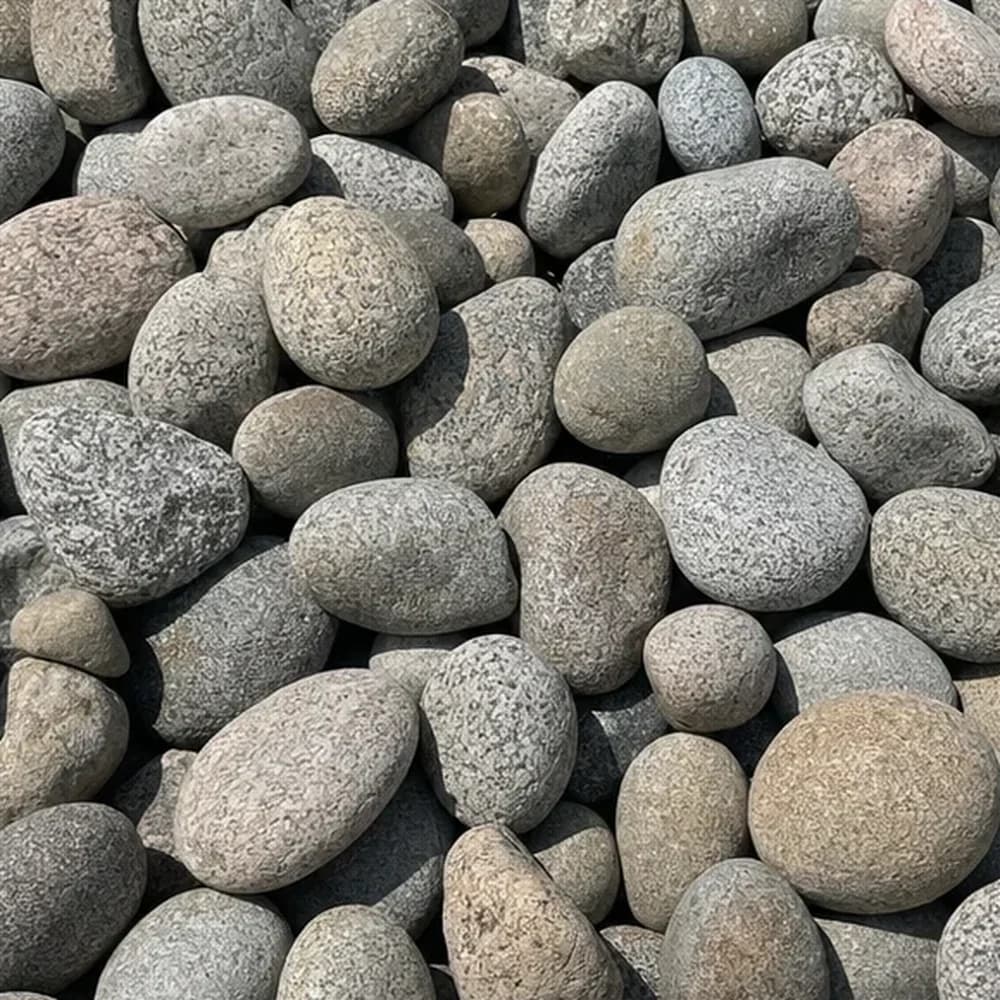
Smooth, naturally rounded Large River Rock adds visual weight to Georgia planting areas, drainage swales, and water-feature borders after heavy rain.
- Size: 2 inches to 4 inches
- Type: Smooth, naturally rounded stones
- Color: Tans, grays and browns
From $1,107 for 1 ton, delivery included (larger loads cost significantly less per ton)
Free delivery included
Free delivery anywhere in Georgia
Pick a delivery date
Weekday delivery, earliest Oct 30
“Needed large river rock for my yard, and the team kept me updated the whole time and made the delivery super easy.”
Steve L. · Verified Buyer
Get a Free Quote
Fill out the form and our sales team will get back to you within the hour.
Size and Grading
- Size
- 2 inches to 4 inches
- Type
- Smooth, naturally rounded stones
- Color
- Tans, grays and browns
You do not shovel this material. A shovel skates off the heap, so the pieces get picked up two or three at a time and set down where they are wanted, which makes the work slower and closer to laying a floor than to spreading gravel. Large river rock runs 2 inches to 4 inches, water-worn smooth, in tans, grays and browns, and the weight of a single piece is the reason a channel built from it holds together when a Georgia thunderstorm drops half an inch of rain on a slope in twenty minutes. Some suppliers in this state call the smoothest of them river slicks.
What large river rock feels like coming off the tailgate
The pile lands as a heap rather than a spread. The pieces are heavy enough that they stay where they fall, so a drop in one spot means carrying every stone to where it is going.
Each one is different. Water rounded them, so there are flat ones, egg-shaped ones and the occasional slab, and a good install uses that: flatter pieces sit down into a channel bed, rounder ones read as boulders at the edge. Sorting as you unload costs nothing and shows in the finished job.
The color comes as a blend rather than a single tone, and a wet stone is a darker, richer version of a dry one. In a dry creek that is a feature, since the bed genuinely changes character after a storm.
Lining the ditch that runs hard for twenty minutes after rain
This is the job most Georgia loads are bought for. A yard has a line that water takes: down the side of the drive, along a swale, out of a ditch at the bottom of a slope. On bare red clay that line cuts a channel, takes the topsoil with it and leaves a gully that gets worse every summer.
Lining it with stone this size gives the water a defined route and something it cannot pick up. Two inch material moves in a real flow; four inch material mostly does not, and a bed containing both sizes wedges together as the smaller pieces settle between the larger ones.
Follow the line water already takes rather than the line you would prefer. Widen it slightly at the bends, where the flow hits hardest, and give the bottom end somewhere to spread out rather than a dead stop.
Fabric, a keyed edge and the stones that go in first
On clay, a stone bed laid straight onto stripped ground is a temporary arrangement. Water works under the stones, fines come up between them, and within two seasons the channel is a muddy trough with rock sitting in it. Geotextile fabric between the clay and the stone is what prevents that, pinned properly and lapped up the sides of the channel.
Then work from the bottom of the run upward, so each course leans against the one below it. Bed the edge stones into the bank rather than perching them on the surface: a stone with soil against its uphill face stays, a stone sitting proudly on top gets rolled.
Depth is a size question. A single layer of 4 inch stone is 4 inches deep by definition, so nothing shallower than that is a real layer, and going deeper means stones stacked on stones rather than a covered surface.
A rock garden bed where the stones are the planting plan
The other common use is decorative and works on the same principle: the stone is placed rather than poured. In a bed, the size is doing the job that mulch and small gravel cannot, which is holding the design in place through a summer of downpours without floating away or needing replacing.
Set the largest and most characterful pieces first as anchors, then fill between them, leaving genuine gaps for plants rather than dropping stone right up to the stems. On a bed with any fall to it, the same rule applies as in a channel: the lowest line of stone goes in first and everything else sits behind it.
Fabric under a planted bed is a compromise, since it slows weeds and gets in the way of planting. Cutting generous openings at the plant positions rather than small slits is the practical middle ground.
River rock at 1 to 3 inch, and riprap: where each one takes over
Three products on this site cover overlapping ground and the choice comes down to what the water does.
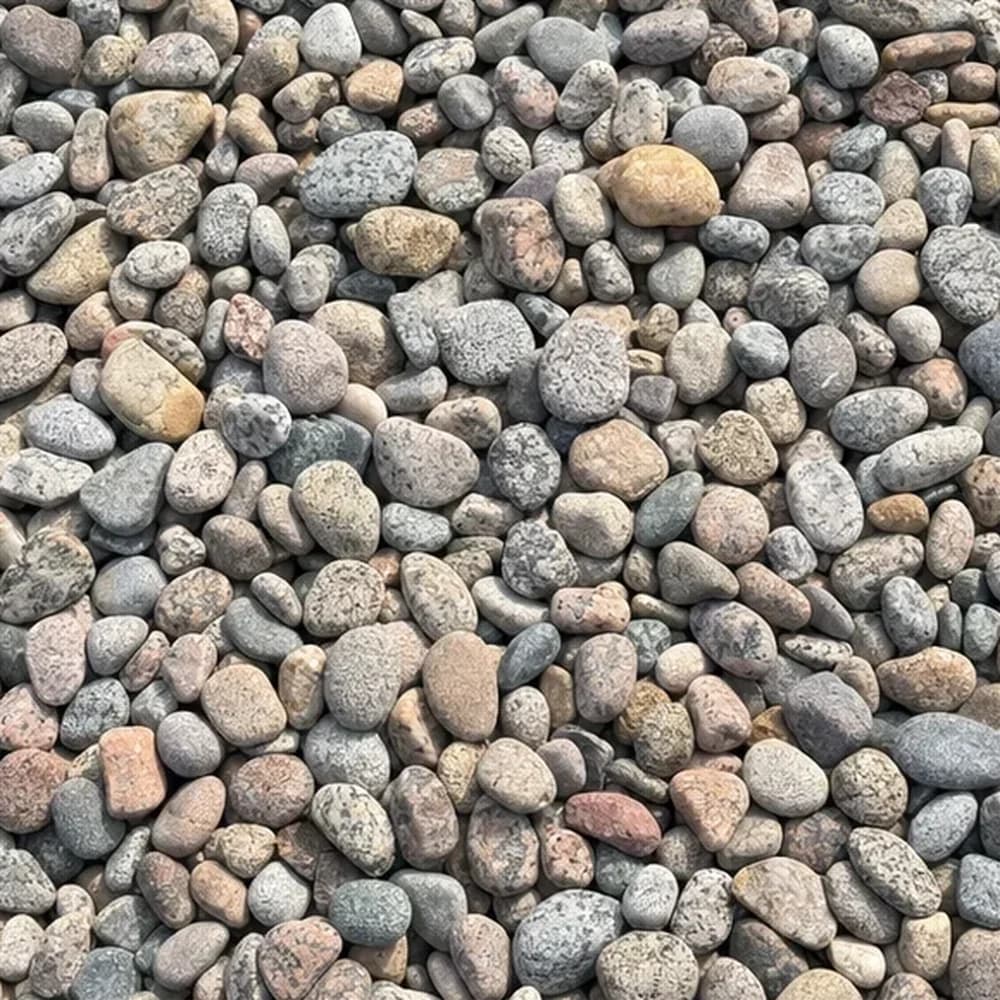
River Rock at 1 to 3 inch is the same material a size down. It is easier to spread, better for a narrow splash strip or a bed you walk past closely, and lighter, which means it moves in a flow that this one would shrug off. Choose it where appearance matters more than staying put.
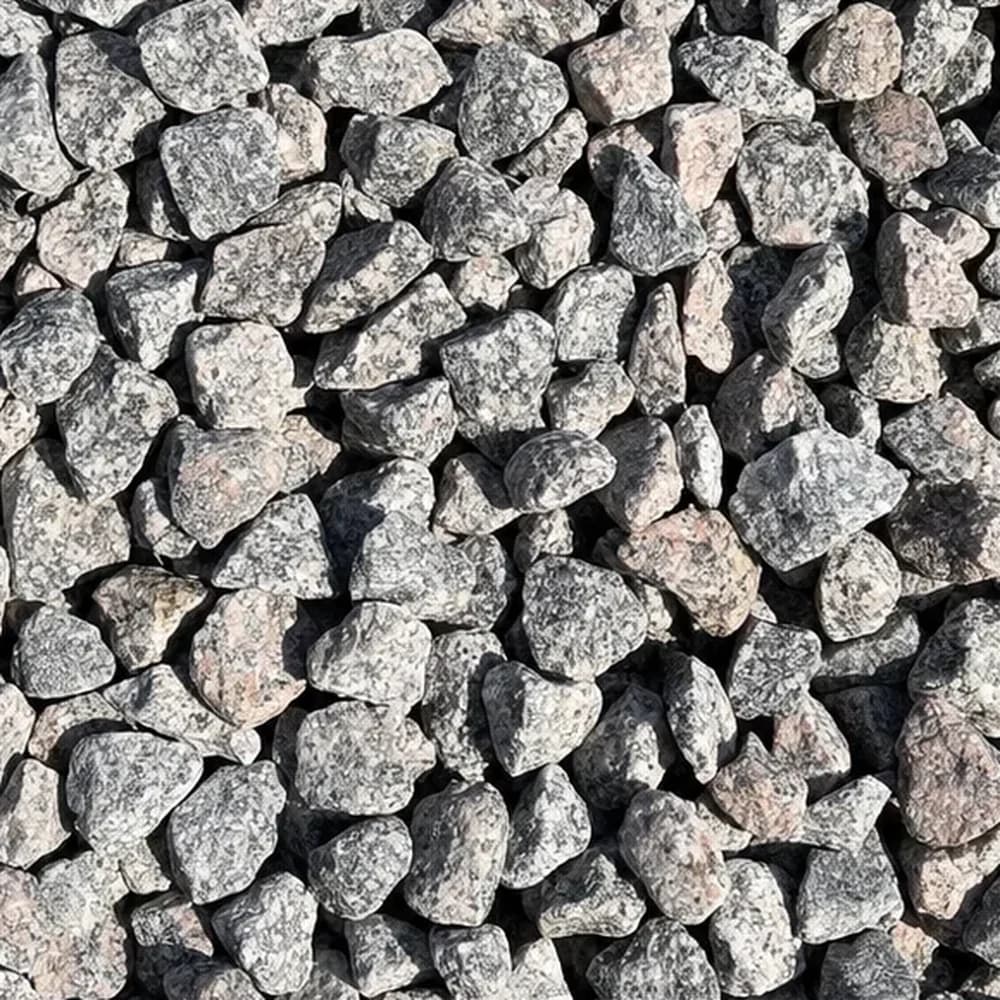
RipRap is a different category: large angular armor stone, specified in Georgia as Type 1 or Type 3 under the GDOT sections, for creek banks, culvert outlets and slopes where water arrives with force. Some yards call the larger granite pieces surge stone. Where a pipe discharges or a bank is actively scouring, that is riprap work, not this.
Large river rock sits between them. Heavy enough for a residential channel and a ditch line, rounded enough to look like landscape rather than engineering.
Why a shed or garage pad wants a different load
Round stone is wrong under a structure and the size makes it worse. A pad has to be flat, compacted and stable, and 2 to 4 inch rounded pieces will not compact, will not sit level and roll under anything with a wheel.
Build a shed or garage pad on a compacted base instead: Crusher Run or GAB (Graded Aggregate Base) for a bound layer that takes the load, or #67 Stone as a drainage course beneath it on ground that stays wet. Save the river rock for the strip around the outside, where roof runoff lands.
Tons for a 48 foot ditch line and a 22 by 10 rock bed
Hypothetical examples, arithmetic shown so your own dimensions drop into the same steps. The site's calculator pages put river rock at roughly 2,700 lb per cubic yard, about 1.35 tons per yard, and that approximate figure gives the tonnages below.
A ditch line 48 feet long and 4 feet wide, lined 5 inches deep: 48 x 4 = 192 square feet. Then 192 x (5 / 12) = 80 cubic feet, and 80 / 27 = 2.96 cubic yards, which is close to 4 tons.
A rock garden bed 22 feet by 10 feet at 4 inches, before deducting the planting gaps: 22 x 10 = 220 square feet. Then 220 x (4 / 12) = 73.3 cubic feet, and 73.3 / 27 = 2.72 cubic yards, about 3.7 tons. Generous plant openings might take a fifth off that, so ordering 3 yards rather than 3.5 is reasonable on a heavily planted bed.
Check both against the River Rock Calculator, which carries the depth guides for this material.
Asking for the drop to be split along the run
A long channel is the one case where where the pile lands matters more than the tonnage. Four tons of stone carried 60 feet by hand is a different weekend from four tons placed along the line of the work.
If the run is long and the truck can get to it, ask through Contact whether the load can be tipped in more than one spot, and mark those spots before the day. Otherwise pick the firmest ground closest to the work: a loaded truck on wet red clay leaves ruts, and a pile on the lawn kills what is under it within the week. Choose a quantity and a delivery date on this page once the channel is cut and the fabric is ready. Delivery is arranged at checkout by ZIP code and the delivery page explains the check.
Quickly Calculate How Much You Need
Material: Large River Rock
How to Measure
Measure the length and width of your project area in feet
Decide on depth in inches (2" for landscaping, 4" for driveways)
Enter the values above and we'll calculate the tonnage you need
Need help figuring out the right amount? We can help!
Call or text us at (678) 562-7522 and we'll help you calculate the right quantity for your project.
Not sure how much you need? The River Rock Calculator has depth guides, coverage charts and worked examples for this material.
Frequently Asked Questions About Large River Rock
Customer Reviews
Went with large river rock for a bed along my driveway, and the team made it super easy. The free delivery was a nice bonus, and I'm really happy with how it all turned out.
Michelle M. · Athens, GA · Verified Buyer
Needed large river rock for my yard, and the team kept me updated the whole time and made the delivery super easy.
Steve L. · Augusta, GA · Verified Buyer
Went with Georgia Rock Supply for large river rock and they kept me updated the whole time. Really happy with how it turned out, would definitely order again and recommend them.
Heather W. · Savannah, GA · Verified Buyer
Decided on large river rock from them and I'm really happy with how it looks, plus the free delivery made it an easy choice.
Christine J. · Columbus, GA · Verified Buyer
Ordered large river rock from them and the whole thing went really smooth. They kept me updated the whole time and the delivery showed up right when they said it would.
Hank K. · Athens, GA · Verified Buyer
Large River Rock has 5 verified customer reviews with an average rating of 5 out of 5.